BIOL 101: Introduction to Human Diseases
BIOL 101: Introduction to Human Diseases
Purpose: to help other instructors teaching the same course
Common Course ID: BIOL 101
CSU Instructor Open Textbook Adoption Portrait
Abstract: This open textbook is being utilized in a Biology course for undergraduate or graduate students by Lisa Romero at CSULB. The open resource provides an outline for the Introduction to Human Diseases course with OER readings, assignments and assessments built in. The main motivation to adopt an open textbook was to customize and update the information while reducing costs to students. Students access the OER course in Canvas.
BIOL 101: Introduction to Human Diseases
Brief Description of course highlights:
An Introduction to the study of human disease, including moral/ethical and economic issues. This comprehensive survey course introduces information and concepts relating to human anatomy, physiology, and disease. Course catalog information
Student population: This is a general education course with students from all majors and all levels (freshmen to seniors). The prerequisite for the course is completion of or concurrent enrollment in a course that fulfills the A.1 GE requirement. The students have various levels of subject knowledge and motivation.
Learning or student outcomes:
1) Students will be able to demonstrate an understanding of core knowledge in human anatomy, physiology and pathogenesis.
2) Students will be able to apply this knowledge to demonstrate an understanding of specific human diseases and identify factors including:
- body systems affected
- general causes or agents of the disease
- mechanism of the disease
- related diagnostic techniques and therapies
3) Students will be able collaborate with others to communicate and demonstrate an understanding of scientific knowledge.
4) Students will practice critical thinking skills with guidance from text, homework assignments and interactive lab activities.
Textbook or OER/Low cost Title: [OER] X Biology 140: Introduction to Human Disease
Brief Description: This OER includes a complete OER LMS course with all relevant materials as listed below (“supplemental resources”) which are compiled in five modules:
- Introduction to Common Diseases
- Infection, Immunity, and HIV
- Blood Diseases
- Importance of Antibiotics and Vaccines in Fighting Disease
- Cardiovascular, Endocrine, Digestive, and Genetic Diseases
- Diseases of the Nervous System and Mind
Please provide a link to the resource Biology 140: Introduction to Human Disease Fort Lewis College
or https://courses.fortlewis.edu/courses/18382
Authors: Steven Fenster, Fort Lewis College
Student access: Students can access materials via Canvas or course links to OpenStax and Libretext provided in the assignments.
Supplemental resources: Publisher ppt Slides, Exams and quizzes (which can be used as questions banks), discussion topics and other assignment options, free textbook resources for chapter readings.
Provide the cost savings from that of a traditional textbook.
Approximately $80-$100 saved.
License*: This is an OER resource with the following creative commons license: Attribution-NonCommercial-ShareAlike 4.0 International
OER/Low Cost Adoption Process
Provide an explanation or what motivated you to use this textbook or OER/Low Cost option.
I previously have used a learning platform that has many of the aspects I want but it is costly, and it lacks the ability for personalization I really need. (The topic is Human Biology rather than Human diseases). I chose this OER course to save students money with the corresponding free resources. More importantly to me as an instructor, this course addresses and organizes the topic in a way that is more suited to the objectives of this course which is to teach the basis of disease rather than the basics of human body systems.
How did you find and select the open textbook for this course? I learned about MERLOT and Libretext from ATS workshops, Instructional designers and librarians. This course was a result a MERLOT search using key terms “Introduction to human disease”. It was that simple!
Sharing Best Practices: I did not know there were repositories containing OER resources, and it is quite simple to search for materials using these databases. I did not know full courses would be available that can be altered as needed. It takes dedicated time to search so I recommend putting a large chunk of time aside to conduct your search and organize the materials you find into one place (there may be a lot of materials). This is something I was unable to do, and I found myself trying to recall what I accomplished during each previous search since I had to fit my searches into a busy semester teaching schedule.
Describe any key challenges you experienced, how they were resolved and lessons learned.
There was an overload of materials at first and lots of ideas floating around in my mind regarding types of materials and assignments I wanted to find. Even after discovering the OER course that looked best, I continued to look for other materials. I should have taken more time to look over the material that seemed best and make a list of what I want to keep and those resources that I found but did not want to use. It is easy to “re-discover” the same materials and waste time realizing why they aren’t applicable for a second time.
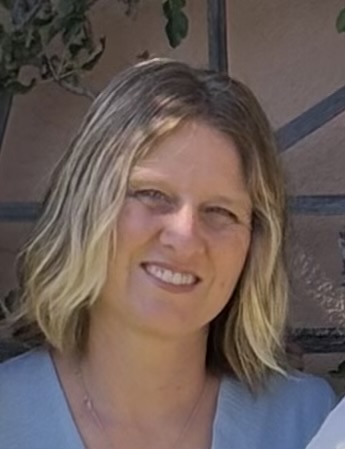
Lisa Romero, Lecturer
I am a biology professor at the California State University of Long Beach.
Description of other courses/course numbers I teach.
BIO 416 - Virology: In this course, we examine the unique molecular biology of viruses in general, the host response toward viruses in general and apply this information by exploring several specific human viruses and the diseases they cause.
BIOL 322 - Parasitic Diseases: An overall review of medically important parasites covering several topics including: epidemiology, parasite-host relationships, life cycles, pathology and treatment. This course includes a lab which focuses on identification. The lab also covers specimen processing and laboratory diagnosis utilizing case studies and microscopy.
BIOL 471 - Bacterial Physiology: This course is a survey of the physiology and metabolic functions of prokaryotes including bacteria and archaea. It is targeted to advanced undergraduate and postgraduate students and will be useful for research in microbiology, molecular biology, biotechnology, biochemistry and related subjects.
BIOL 101 - Introduction to Human Diseases: Described above.
Describe your teaching philosophy and any research interests related to your discipline or teaching.
My teaching philosophy is founded on the idea that everyone can learn and succeed given the proper tools and environment. Each student comprehends according to their unique combination of learning modalities and each individual possesses a different level of confidence in their own abilities and barriers to overcome. My understanding of teaching has evolved to also consider the social context of learning and the role communication and interactions play in conferring knowledge. Therefore, my goal as a teacher is three-fold: to encourage comprehension and remove barriers; to ensure that each individual feels valued, respected, and therefore motivated to attain or exceed their learning goals; to provide time for learners to both communicate and assimilate new knowledge.