General Chemistry I and II (CHEM111 and CHEM112)
General Chemistry I and II (CHEM111 and CHEM112)
Purpose: to help other instructors teaching the same course
Common Course ID: 001816 and 001817
CSU Instructor Open Textbook Adoption Portrait
Abstract: This open textbook is being utilized in a chemistry course for undergraduate or graduate students by Dr. Lisa Kendhammer at California State University, Chico. The open textbook provides a brief introduction to the topics of chemistry. It goes over Matter, Reactions, States of Matter, Energy, Atomic Theory, Bonding, Kinetics, Equilibrium, Electrochemistry, and Nuclear Chemistry. The main motivation to adopt an open textbook was to lower the cost of the course to the students and make it a zero cost course. Most students access the open textbook via a link to LibreText where the textbook is housed.
General Chemistry I and II (CHEM111 and CHEM112)
Brief Description of course highlights: General Chemistry I and II are a two-semester course on the basics of chemistry. General Chemistry I includes principles of chemistry for students in science and engineering programs. Topics include atoms, molecules and ions, reactions, stoichiometry, the periodic table, bonding, chemical energy, gases, and solution chemistry. The laboratory sequence supports the above topics including both qualitative and quantitative experiments, analysis of data, and error propagation. 3 hours laboratory, 3 hours lecture. General Chemistry II is a continuation of CHEM 111. Topics include kinetics, equilibrium, acid-base chemistry, electrochemistry, chemical thermodynamics, coordination chemistry, and nuclear chemistry. The laboratory sequence supports the above topics including both qualitative and quantitative experiments, analysis of data, and error propagation. 3 hours laboratory, 3 hours lecture. Course Catalog Link
Student population: The majors who take CHEM111 are: Agricultural Sciences, Animal Sciences, Biochemistry, Biological Sciences, Chemistry, Civil Engineering, Computer Engineering, Computer Science, Electrical/Electronic Engineering, Environmental Sciences, Exercise Physiology, Geology, Mechanical Engineering, Mechatronic Engineering, Microbiology, Natural Sciences, Nursing, Physics, and Plant and Soil Science. The majors who take CHEM112 are Biochemistry, Biological Sciences, Chemistry, and Environmental Sciences. The prerequisites for CHEM111 is high school chemistry and the prerequisite for CHEM112 is a C- or better in CHEM111. Most students who take CHEM111 are in one of the engineering majors, the biology majors, or the chemistry majors. For CHEM112 it is mainly biology majors and chemistry majors. The majority are first year and second year students.
Learning or student outcomes:
For CHEM111:
COURSE LEVEL
Students should be able to achieve proficiency in:
- Applying chemical theory
- Performance of laboratory manipulations
- Analysis of experimental data
- Clearly and concisely expressing their knowledge in both written and oral communication
STUDENT LEVEL
By the end of the term, students will be able to:
- Energy
- Quantitatively and qualitatively evaluate entropic and enthalpic changes during a reaction;
- Use enthalpy and entropy to determine the free energy change of a reaction and assess the spontaneity of the reaction;
- Use electronic transitions in the visible and UV ranges of the electromagnetic spectrum to explain absorption and emission spectra based on electronic configurations.
- Structure-function-property relationships
- Distinguish structural motifs within chemical formulae and diagrams, use those motifs to draw chemical structures in two- or three-dimensions, and consequently predict molecular properties and functions.
- Use historical and modern atomic theory to differentiate atoms and isotopes, as well as predict bonding between atoms.
- Bonding
- Determine the type and magnitude of bonding present in chemical species and several representations of them;
- Differentiate between bonding interactions and various intermolecular forces.
- Measurement
- In the course of performing laboratory experiments safely, conduct measurements with a variety of instrumentation, documenting any potential sources of error, and describing limitations to accuracy and precision in their measurements;
- Identify and differentiate various degrees of scale and convert between units of measure.
- Phases of Matter
- Classify different phases of matter; describe the forces and bonding present within each phase, and drawing representations of the interactions present.
- Reactivity
- Identify the principle species in solution;
- Predict the outcome of chemical interactions based on structural and functional motifs;
- Assess the type of reactivity of a small number of organic functional groups.
- Use the concepts of limiting reagents and theoretical yields to measure the evaluate the extent of a reaction.
For CHEM112:
- Students will have a good foundational knowledge in fundamental scientific theories.
- Students will increase their skills in problem solving, analytical reasoning, and critical thinking.
- Students will be able to apply their knowledge to environmental, economic, and social situations involving chemical issues.
- Students will be able to perform scientific experiments in such as way where they gather observations and analyze the results.
- Students will develop an understanding of how to safely handle and dispose of safe chemicals.
OER/Low Cost Adoption Process
Provide an explanation or what motivated you to use this textbook or OER/Low Cost option. The main reason was to save students money. They were telling us that if they bought the eText then they couldn’t pay rent that month or would have to skip meals. We wanted an accessible option they could access at zero cost but would give us flexibility to choose the content, order, and format.
How did you find and select the open textbook for this course? I analyzed a couple of different platforms, but LibreTexts was the easiest to use and had the ability to merge content from different open sources as well as writing our own. There was already a map built for the Textbook we were previously using so I had to curate that material as well as reorganizing it and adding some of our own.
Sharing Best Practices: Randy Miller is teaching CHEM112 is one of the OER textbooks this semester. I truly think any faculty in the Chemistry & Biochemistry department would be interested in trying to make their courses lower cost. Something I wish I had known sooner is how many resources there are out there for eTexts and how easy it is to mix and match content from difference sources to make it fit your course.
Describe any challenges you experienced, and lessons learned. There was a learning curve for understanding and working with LibreTexts. Trying to figure out how to edit and use different sources was confusing. There were also incomplete OERs where sections would be listed but they were missing information. There were also incomplete practice materials at the end of every section. You also had to wait for the company to publish the material, so it was not instantaneous when you finished your editing.
Textbook or OER/Low cost Title: General Chemistry I (CSU Chico) and General Chemistry 112
Brief Description: These eText feature the content that we typically teach in General Chemistry I and II. They were already organized similar to the Textbook we used to use and featured common topics. The charts and figures are similar to the Textbook we used to use so since multiple instructors teach this course it will not be a heavy burden to transfer to the new OER. At the end of most chapters there are problem sets the students can use for extra practice. It also has many worked out examples in the eText itself to explain the concepts and walk the students through how to solve the items. It is organized where common topics are featured under one chapter and the information builds on each chapter utilizing prior knowledge to explain new concepts. One of the main reasons we chose this eText plaform was the ability to mix and match content for different eTexts, to edit the content, and to add our own content as well.
Please provide a link to the resource https://chem.libretexts.org/Courses/California_State_University_Chico/General_Chemistry_I_(CSU_Chico) https://chem.libretexts.org/Courses/California_State_University_Chico/General_Chemistry_112
Authors: The eText was authored, remixed, and/or curated by LibreTexts and was curated by Lisa K Kendhammer.
Student access: The students access the eText through a link in the course management system or directly to LibreTexts. The LibreTexts libraries are Powered by NICE CXone Expert and are supported by the Department of Education Open Textbook Pilot Project, the UC Davis Office of the Provost, the UC Davis Library, the California State University Affordable Learning Solutions Program, and Merlot. The students also have the option to download the book as a pdf.
Supplemental resources: The students have instructor written homework problems with feedback that is administered through Canvas, they have a lab manual that is provided through Canvas that they fill out while they perform the laboratory experiments in class, they have access to practice exams as well as keys to those exams, pre-lecture slides, post-lecture slides, and instructional videos. There are also daily activities that they complete in their groups.
Provide the cost savings from that of a traditional textbook. $120 for an eText, $175 for a physical copy
License*:
CC BY-NC-SA 4.0 for General Chemistry I (CSU Chico) and CC BY-NC-SA 4.0: 82.7% (81 pages)
- Undeclared: 11.2% (11 pages)
- CC BY-NC-SA 3.0: 3.1% (3 pages)
- CC BY 4.0: 2% (2 pages)
- CC BY-SA 4.0: 1% (1 page)
For General Chemistry CHEM 112
Instructor Name - Lisa Kendhammer
I am a chemistry professor at California State University, Chico.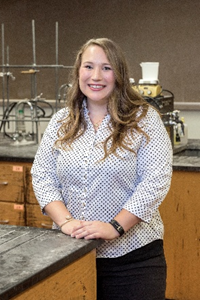 Please provide a link to your university page.
https://www.csuchico.edu/chem/about-chem/faculty-staff/faculty/lisa-kendhammer.shtml
Describe your teaching philosophy and any research interests related to your discipline or teaching. My teaching philosophy is to create a comfortable, diverse, and safe learning environment. This includes respect for each other, for me to treat the students with respect, and them to treat me with respect. I strive to bring in diversity both in the scientist I present as well as the type of learning. I include multiple different learning opportunities so that different preferred learning styles are met. I include real life examples and try to connect the content to each major. I think the more we can connect with the students both on a personal and learning environment the more they’ll enjoy the material and want to learn it.
Please describe the courses you teach – I teach both semesters of the general chemistry sequence. These are introductory courses to all topics of chemistry before the students go into the more specialized classes. They cover the basics or most areas of chemistry through a mixture of mini-lectures and active learning. There is a lot of group work as well as hands-on lab work. I also teach quantitative analysis lectures and laboratories. Quantitative analysis focuses on using chemistry and math to determine the amount of a specific species in a sample. I teach it through mini-lectures and active learning. There is group work as well as hands-on lab work as well.