Sociology of Deviant Behavior (SOCI 380)
Sociology of Deviant Behavior (SOCI 380)
Purpose: to help other instructors teaching the same course
Common Course ID: SOCI 380
CSU Instructor Open Textbook Adoption Portrait
Abstract: Abstract: This library-sourced textbook is being utilized in a Sociology course for undergraduate students by Alexandra Kokkinakis, M.A. at California State University, Chico. The textbook provides in-depth exploration of diverse theories and subfields within the sociology of deviant behavior. The main motivation to adopt an open textbook was to save students money by removing textbook costs while offering quality content. Students can access the open textbook in the CSU Chico library database.
Course Title and Number - Sociology of Deviant Behavior (SOCI 380)
Brief Description of course highlights: This course takes an in-depth look at how deviance is constructed in our society. This includes deviant identities, deviant subcultures, and the stigmatization of individuals and groups engage in non-normative behavior. Students examine the main theories of deviance, and consider ethical and political issues when researching deviance. https://catalog.csuchico.edu/courses/soci/
Student population: This course is an upper division elective for Sociology and Psychology, required for Criminal Justice. Most students are juniors and seniors, predominantly sociology or Criminal Justice majors or minors. There are no prerequisites. Students may be on campus or distance.
Learning or student outcomes:
1. Develop sensitivity and critical thinking regarding various perspectives of deviant behavior.
2. To understand the sociological concepts relevant to deviance and conformity, rule enforcement, social control, and treatment of deviants.
3. To be aware of the domestic and global forces impacting deviant behavior and society’s response to deviance.
4. Bring a sociological perspective to bear upon various topics related to deviance and deviant and conforming behavior.
Textbook or OER/Low-cost Title: Bryant, Clifton D. The Routledge Handbook of Deviant Behavior. 1st ed., Routledge, 2011 https://ebookcentral.proquest.com/lib/csuchico/detail.action?docID=716530
Brief Description: This text was selected for SOCI 380 because it provides foundational concepts and theories in a similar fashion to previous textbooks used for the course while also being zero cost for students. While the arrangement of concepts presented in the book are different from previous semesters, I was able to maintain a majority of my previous assignments with minimal adjustments because the content was similar.
Please provide a link to the resource https://csu-chico.primo.exlibrisgroup.com/permalink/01CALS_CHI/9ipam3/cdi_askewsholts_vlebooks_9781134015580
Author: Bryant, Clifton D.
Student access: Students may access this source through a link available to them in their campus homepage. This link will take them to the CSU Chico Library’s access to the textbook in ProQuest E-Book Central. They may download several chapters as PDFs, but to access the full book they must utilize the 180 day download option to be read with a third-party reader such as Kortext or Adobe Acrobat.
Supplemental resources:
- Canvas (via CSU Chico)
- CSU Chico Library Database and/or 3rd party reader (Kortext, Kersweil, Adobe, etc.)
- YouTube
- PowerPoint (I create all my own slides)
- Jacobsen, M. H. (Ed.). (2023). The Anthem Companion to Erving Goffman. Anthem Press. https://doi-org.mantis.csuchico.edu/10.2307/jj.168326
- Scarlet Road (Documentary on Docuseek)
Provide the cost savings from that of a traditional textbook.
Traditional Textbook Costs:
- “Social Deviance” by Tim Delaney. Rowan & Littlefield, 2017. ($50-111)
- “Stigma: Notes on the Management of Spoiled Identity” by Erving Goffman. ($7-14)
License: Time-metered access through CSU Chico Library Database
*Unlimited online user access for CSUC students.
*Online viewing available for 180 days. Offline viewing requires a free personal account and free 3rd party software.
OER/Low Cost Adoption Process
Provide an explanation or what motivated you to use this textbook or OER/Low Cost option. My goal is to save students money while also addressing the diverse accessibility needs of students on campus as well as in distance courses.
How did you find and select the open textbook for this course? I participated in a Faculty Development CAL$ Summer Workshop which provided skills, consultations, and resources to faculty seeking low/zero-cost sources for their classes. It was through this workshop that I discovered the textbook and additional materials in the library database.
Sharing Best Practices: The first suggestion I would make is checking if your campus offers any workshops or Faculty Development options like our CAL$ Workshop! Learning how to better navigate licensing for sources as well as having access to those on campus with the knowledge of where to look and how to implement low/zero cost sources has been incredibly valuable. I also would recommend starting the journey towards lowering cost options for students by assessing what are the “needs” vs. “nice to haves” in a textbook. From there, explore if some of those “nice to haves” are something that can be fulfilled through supplemental material and/or in-class coverage. Thinking outside the box about your class and the content you include is also very helpful because it may present opportunities to look at unconventional sources in a new light.
Describe any key challenges you experienced, how they were resolved and lessons learned. The biggest hurdle I encountered was determining how to make this resource available to students in diverse ways to accommodate learning needs. Because this text is not available to download via PDF in its entirety, it requires a 3rd party reader for students. Printing the book would be very costly for students as well so it was essential to find a wide variety of options. By working with our department librarian and our campus Accessibility Resource Center, we were able to find good solutions for diverse student needs while still working within the text license. This was a great learning opportunity to explore what options our campus can offer beyond what is available at first glance.
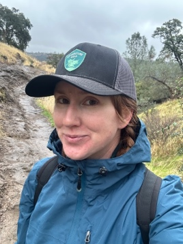
Instructor Name - Alexandra S. Kokkinakis
I am a Lecturer in the Department of Sociology at California State University, Chico.
 Please provide a link to your university page.
https://www.csuchico.edu/
Please describe the courses/course numbers that you teach
- Sociology of Deviant Behavior (SOCI 380)
- Environmental Sociology (SOCI 420)
- Self and Society (SOCI 360)
- Sociology of Social Movements (SOCI 447)
- Sociology of Popular Culture (SOCI 227)
- Social Problems (SOCI 200)
- Introduction to Sociology (SOCI 100)
Describe your teaching philosophy and any research interests related to your discipline or teaching. I take a “something for everyone” approach to teaching by emphasizing diverse voices, authors, and perspectives as well as offering versatile mediums of material and assignment designs. I strive to guide students in building tools and framework they can utilize to explore related topics and areas of their own interest. The goal is not to memorize terms and theories, but to be able to comprehend the real-world application of course material while thinking compassionately and critically about the experiences of others that may differ from our own. My interest areas include stigma and identity, adolescence, censorship, sociomusicology, sociology of comedy, and sustainability complexities diverse cultural/religious landscapes.