SPAN 101: Beginning Spanish
SPAN 101: Beginning Spanish
Purpose: to help other instructors teaching the same course
Common Course ID: SPAN 101
CSU Instructor Open Textbook Adoption Portrait
Abstract: This open textbook is being adapted for use in SPAN 101: Beginning Spanish, taught by Melinda Jackson at California State University, Chico. ¡Chévere! Introductory Spanish I from LibreTexts provides a cohesive beginning-language curriculum with contextualized vocabulary and grammar instruction, authentic cultural content, audio and multimedia resources, interactive practice exercises, discussions, and collaborative activities. Selected exercises from ¡Chévere! have been adapted by the instructor into graded Canvas quizzes with meaningful feedback, providing an assessed homework component to complement the extensive practice already available in the OER. The primary motivation for adopting this resource is to eliminate the financial barrier of commercial course materials while developing a zero-cost alternative to the digital homework platforms traditionally used in SPAN 101. One of the course's four units has traditionally consisted of an online lab component that includes instruction, practice, and graded homework. The goal is to preserve that robust online learning component without requiring students to purchase access to a commercial platform. As part of this summer OER adaptation project, two fully developed modules were completed, establishing the structure for the remaining modules to be developed over a full semester to complete the SPAN 101: Beginning Spanish course. The first two developed modules also culminate in an instructor-developed Integrated Performance Assessment (IPA) that assesses interpretive, interpersonal, and presentational communication.
Course Title and Number - Beginning Spanish (SPAN 101)
Brief Description of course highlights: SPAN 101: Beginning Spanish introduces students to Spanish language and culture with an emphasis on developing skills in listening, speaking, reading, and writing. The course develops functional communication through vocabulary and grammar instruction, cultural learning, and interactive language practice. It is a four-unit, in-person course; one unit corresponds to an online lab component that provides additional instruction, practice, and graded homework outside of class. The course also fulfills General Education requirements and emphasizes communication and engagement with diverse cultures and perspectives. The first two developed modules culminate in an instructor-developed Integrated Performance Assessment (IPA) that assesses interpretive, interpersonal, and presentational communication.
Course catalog: SPAN 101 – Beginning Spanish I, Chico State University
Student population: SPAN 101 is a General Education course open to students from across the university. It fulfills General Education Area C2: Humanities and the Global Cultures requirement. Students represent a variety of majors and academic backgrounds and enter the course with varying levels of previous exposure to Spanish. There are no prerequisites.
Learning or student outcomes:
1. To understand and produce oral communications at a novice low level oral proficiency, as measured by the ACTFL (American Council on the Teaching of Foreign Languages) scale, demonstrating the ability to identify and begin to describe. Specifically, in narrative and interactive linguistically appropriate formats, students are able to orally communicate about the following topics: name, age, birthday, personal interests, school life, daily schedule, academic interests, career aspirations, family members, interests like music and other activities.
2. To develop novice low level writing proficiency, as measured by the ACTFL scale, demonstrating emerging ability to write simple, fixed expressions and limited memorized material and some re-combinations thereof. Can write names, numbers, dates, own nationality, and other simple autobiographical information, as well as some short phrases and simple lists.
3. To develop novice low level proficiency in reading comprehension, as measured by the ACTFL scale, in order to be able to comprehend selected authentic texts, within an appropriate linguistic level cultural, literary, or linguistic usage or references on a number of subjects. Students read authentic texts with glosses and identify aspects of the text. Specifically, students are able to correctly respond to or identify information through these questions: who, what, where, when, with whom, how, how much, why.
4. To develop a beginning understanding of cultural literacy, to be able to identify and describe basic aspects of cultural and literary texts and traditions as they emerge from their cultural context. Specifically, students are able to: identify common cultural practices, identify geographical origins of culturally diverse Spanish speakers, be aware of issues relating to race, class, and gender.
Sample Assignment from the Course:
SPAN_101_Sample_Modules_1_and_2_FINAL.pdf
Textbook or OER/Low cost Title: ¡Chévere! Introductory Spanish I — LibreTexts
Brief Description: ¡Chévere! Introductory Spanish I, available through LibreTexts, is a beginning Spanish OER organized into modules that integrate contextualized vocabulary and grammar instruction, authentic cultural content, audio and multimedia resources, interactive practice exercises, writing and discussion activities, and collaborative assignments. The text develops listening, speaking, reading, and writing through communicative, contextualized practice rather than presenting language structures in isolation. Each module moves from introductory content and vocabulary and grammar development through practice, review, and application. LibreTexts includes embedded audio and video, interactive exercises, cultural readings, and downloadable course content. Although an adapted online homework component exists for ¡Chévere!, it is not currently available for use at CSU Chico. To provide the assessed online homework component needed for SPAN 101, selected exercises have been adapted by the instructor into graded Canvas quizzes with meaningful feedback The first two developed modules also culminate in an instructor-developed Integrated Performance Assessment (IPA) that assesses interpretive, interpersonal, and presentational communication.
Please provide a link to the resource https://human.libretexts.org/Bookshelves/Languages/Spanish/First-year_Spanish_Bookshelf/Chevere_Introductory_Spanish_I_(Brown_Escudero_Montoya_and_Small)
Authors: Erica Brown, Alejandra Escudero, María Cristina Montoya, and Elizabeth Small
Student access: Students access the OER and instructor-adapted assessments through Canvas. Course materials from ¡Chévere! Introductory Spanish I are integrated into the Canvas course, allowing students to access the textbook content, practice activities, multimedia resources, and graded Canvas quizzes without purchasing a textbook or access code. Students also have access to the original ¡Chévere! Introductory Spanish I digital textbook through a LibreTexts link provided in Canvas.
Supplemental resources: Supplemental resources will include instructor-developed PowerPoint presentations, handouts, activities, study guides, and existing instructor-created in-class practice quizzes with answer keys that align with the grammatical content of the OER. Additional authentic audio, video, and cultural materials will also be incorporated to supplement instruction and provide additional opportunities for practice and interaction.
The first two developed modules culminate in an instructor-developed Integrated Performance Assessment (IPA) that assesses interpretive, interpersonal, and presentational communication. The IPA provides students with an opportunity to integrate the vocabulary and grammatical structures developed throughout the modules and apply them through meaningful communication. The completed assessment includes rubrics for each communicative mode and an instructor answer key. As the remaining course modules are developed, a culminating IPA is planned after each two-module sequence.
Provide the cost savings from that of a traditional textbook. The digital textbook and homework platform currently used in SPAN 101 costs $75 per student. With three to four SPAN 101 sections offered each semester and enrollment capped at 30 students per section, adopting the zero-cost OER could save students $6,750 to $9,000 per semester.
License: Creative Commons - CC BY 4.0
OER/Low Cost Adoption Process
Provide an explanation or what motivated you to use this textbook or OER/Low Cost option. The primary motivation for adopting ¡Chévere! Introductory Spanish I is to replace the $75 digital textbook and homework platform currently used in SPAN 101 with a high-quality, zero-cost OER that provides beginning-language instruction and learning materials comparable to those provided by the existing commercial materials, while maintaining a robust online learning component that includes instruction, practice, and graded homework. The OER also provides the flexibility to adapt and customize materials for SPAN 101, including developing instructor-adapted Canvas quizzes with meaningful feedback and incorporating authentic cultural content and additional instructional materials. This approach allows the course to maintain the benefits of an integrated digital learning environment while providing students with a zero-cost alternative.
How did you find and select the open textbook for this course? I initially selected a different OER textbook for SPAN 101. While meeting with Canvas professionals for assistance with integrating that resource into Canvas, one of them recommended ¡Chévere! Introductory Spanish I and shared a link to the resource. I then investigated and evaluated ¡Chévere! and determined that it was a better fit for the course because of its comprehensive beginning-language content, interactive practice, multimedia resources, authentic cultural content, and adaptability for the online lab component. We were also able to successfully integrate the resource into Canvas. After evaluating the resource and its suitability for SPAN 101, I decided to adopt ¡Chévere! as the foundation for the course adaptation.
Sharing Best Practices: Faculty who are just getting started with OER should take time to evaluate resources carefully rather than selecting a textbook based only on cost or subject coverage. Look at the complete learning experience: organization, instructional content, practice opportunities, multimedia, cultural materials, accessibility, and the availability of assessments and supplemental resources. It is also important to determine early how the resource will work within the institution’s learning management system. Working with Canvas professionals was extremely valuable during this project, both for determining how materials could be integrated into Canvas and for identifying additional OER possibilities.
I would also recommend beginning with a strong, cohesive OER that can serve as the foundation for the course and then adapting it to meet the needs of the particular course and students. For SPAN 101, ¡Chévere! Introductory Spanish I provides that foundation, while allowing me to adapt exercises into graded Canvas quizzes, incorporate additional authentic cultural materials, and develop supplemental instructional materials. Faculty do not necessarily need to recreate everything from the beginning; existing instructional materials that align with the OER can continue to be used and adapted where appropriate.
Faculty should also investigate the technical integration of an OER before beginning extensive course development. Determine not only whether the primary resource can be integrated into the learning management system, but whether all of the components you plan to use—including homework systems, interactive activities, multimedia, and other ancillary resources—will function within your institution’s existing systems. Identifying these limitations early can help faculty plan adaptations and alternatives before significant development work has been completed.
Finally, plan the project in manageable stages. Developing two complete modules during this summer project provided an opportunity to establish the organization, assessment approach, and structure that can be followed as the remaining modules are developed over the full semester. Having that model in place makes it possible to build the course systematically while maintaining consistency across modules.
Describe any key challenges you experienced, how they were resolved and lessons learned. One of the primary challenges was determining how fully ¡Chévere! Introductory Spanish I and its available components could be integrated into Canvas. Although an adapted online homework component exists, it is not currently available for use at CSU Chico. As a result, I developed graded Canvas quizzes by adapting selected exercises from the OER so that students can still have an assessed online homework component without purchasing access to a commercial platform.
Developing the Canvas quizzes was itself a significant learning process. Exercises had to be carefully selected and adapted into appropriate assessment formats, answer choices and feedback had to be developed and reviewed, and the quizzes had to be tested in Canvas to ensure that they functioned as intended. Some exercises also required modification because activities originally designed around audio did not always translate directly into an appropriate Canvas quiz format. This process reinforced the importance of carefully reviewing both the instructional content and the functionality of adapted assessments rather than assuming that materials will transfer seamlessly from an OER into an LMS.
Another challenge was evaluating the accessibility and usability of the OER materials, particularly multimedia and interactive content. OER materials still need to be reviewed carefully for accessibility, accuracy, functionality, and suitability for the specific course. The experience reinforced the importance of addressing accessibility throughout the development process rather than waiting until the course is complete.
The most important lesson learned was to investigate the complete resource and its technical requirements before beginning extensive development. An OER may provide strong instructional content while still requiring substantial adaptation, assessment development, accessibility review, and supplemental materials. Establishing a consistent structure through the first two fully developed modules has provided a model for completing the remaining SPAN 101 modules over the full semester.
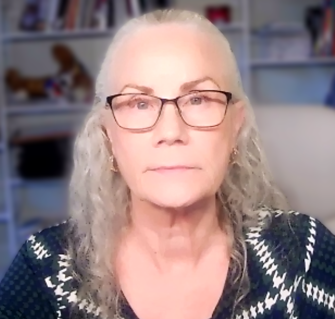
Instructor Name - Melinda Jackson
Lecturer of Spanish at California State University, Chico.
 Please provide a link to your university page.
https://www.csuchico.edu/
Please describe the courses/course numbers that you teach.
SPAN 101: Beginning Spanish I
SPAN 102: Beginning Spanish II
Describe your teaching philosophy and any research interests related to your discipline or teaching. My teaching philosophy is grounded in a commitment to student dignity, equity, and meaningful engagement. I strive to create inclusive learning environments in which students feel respected, valued, and capable of success. This is particularly important in language learning, where speaking, writing, and experimenting with another language require vulnerability. I emphasize respectful and transparent communication, active and collaborative learning, multiple modes of engagement, and timely, meaningful feedback. I view the classroom as a practice space where students can take risks, make errors, learn from one another, and develop confidence in their ability to succeed.
My research interests include the student perspective in language learning and, more broadly, the role of student perspectives in teaching and learning. I began exploring this area during my master’s program and would like to develop that research further. I am particularly interested in how students perceive their own learning needs, which instructional practices and materials they find most effective, and how incorporating student perspectives can inform course design and teaching practices. I believe students’ experiences and perspectives are an important source of information about learning and should be considered alongside faculty expertise when evaluating and improving instruction.