Foundations and Futures: Asian American and Pacific Islander Multimedia Textbook
Foundations and Futures: Asian American and Pacific Islander Multimedia Textbook
Purpose: to help other instructors teaching the same course
Common Course ID: ASAM 100 (CSUC AAST 153)
CSU Instructor Open Textbook Adoption Portrait
Abstract: This multimedia open textbook is being utilized in an Asian American Studies (Ethnic Studies) course for undergraduate or graduate students by Susan Green at California State University Chico. The open textbook provides currently the most comprehesive collection of articles and multimedia supporting materials for high school/college/university students in Asian American Studies. The main motivation to adopt an open textbook was expense and access. Most students are not purchasing textbooks and hoping to just “wing it” and pass the course. Now students can access the free open multimedia textbook online, hosted by UCLA.
Course Title and Number - ASAM 100 (CSUC AAST 152 Introduction to the Asian American Experience)
Brief Description of course highlights: Typically Offered: Fall and spring
https://catalog.csuchico.edu/courses/aast/ This course examines the Asian experience in the U.S. over the last 150 years by focusing on the experiences of different Asian ethnic groups. Focusing on the relational racialization of Asian Americans, this course explores various historical and contemporary issues in Asian American communities. While the content highlights the experiences of Asian Americans, students also interrogate their own racial relationality, history, and future. 3 hours lecture. (000003) General Education: Ethnic Studies (6) Grade Basis: Graded Repeatability: You may take this course for a maximum of 3 units. Course Attributes: Lower Division
Student population: The overwhelming majority of the students are general education Freshmen and Sophomores completing their General Education Ethnic Studies (Area 6) requirement. Students usually have no knowledge of the subject area or populations included beyond the Chinese Americans who built the Transcontinental Railroad, or the Internment of the Japanese under EO 9066. The course is required for the minor in Asian American Studies. There is typically one section offered per semester with 59 students. However, this resource is an excellent one for anyone teaching a broad Ethnic Studies course in which Asian American communities are addressed.
Learning or student outcomes: CALIFORNIA STATE UNIVERSITY ETHNIC STUDIES CORE COMPETENCIES
CSUCES CC 1: Analyze and articulate concepts such as race and racism, racialization, ethnicity, equity, ethno-centrism, eurocentrism, white supremacy, liberation, decolonization, sovereignty, imperialism, and anti-racism as analyzed in Asian American Studies.
CSUCES CC 2: Apply theory and knowledge produced by Asian American communities to describe the critical events, histories, cultures, intellectual traditions, contributions, lived-experiences and social struggles of those groups with a particular emphasis on agency and group-affirmation.
CSUCES CC 3: Critically analyze the intersection of race and racism as they relate to class, gender, sexuality, religion, spirituality, national origin, immigration status, language, and/or age in Asian American communities.
CSUCES CC 4: Explain and assess how struggle, resistance, racial and social justice, solidarity, and liberation, as experienced, enacted, and studied by Asian Americans are relevant to current and structural issues such as communal, national, international, and transnational politics as, for example, in immigration, reparations, settler-colonialism, multiculturalism, language policies.
CSUCES CC 5: Describe and actively engage with anti-racist and anti-colonial issues and the practices and movements in Asian American communities to build a just and equitable society.
Syllabus and/or Sample assignment: The Syllabus indicates which of the CSUCES CC is met by each assignment so students can clearly see how at least 3 are met by this Area 6 Course. Assignments.docx
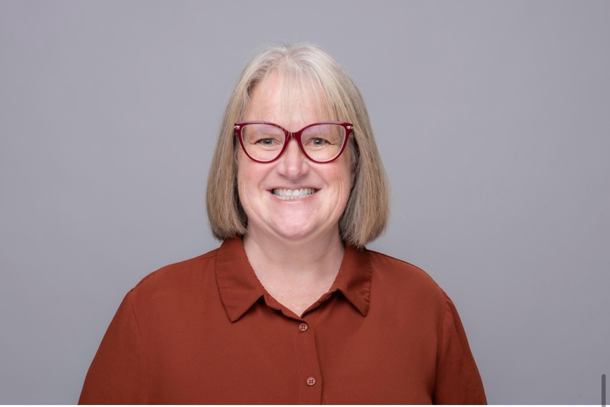
Instructor Name - Susan Gordon Green
I am an Ethnic Gender and Queer Studies (EGQS) professor at California State University Chico.
 Please provide a link to your university page.
https://apps.csuchico.edu/directory/Employee/sgreen
Please describe the courses/course numbers that you teach. I regularly teach EGQS 155 – Introduction to Ethnic Gender and Queer Studies
CHLX/HIST 235 -Mexican American History
EQGS 300H – Honors Ethnic Studies Methodology
CHLX 157 – Introduction to Latinx Studies; and new courses on the horizon including AAST 152 – Introduction to the Asian American Experience
EGQS 458 – Leading Social Change; and a comparative Latinx/APIDA Movements course.
Describe your teaching philosophy and any research interests related to your discipline or teaching. My teaching philosophy has always been about accessibility, meeting students where they are at, and raising awareness. I think Ethnic Gender and Queer Studies has probably been more liberatory than other more traditional disciplines as an interdisciplinary field, based in community mandate and trust. As part of the boards of both the California Faculty Association and California Teachers Association, I spent 8 years working daily with PreK-12 teachers, student teachers, California Community College System faculty, the California Commission on Teacher Credentialing, and at the legislature on large policy issues like AB 1460 creating the CSU Ethnic Studies graduation requirement, and AB 101 creating the high school Ethnic Studies graduation requirement. This time shaped my understanding of how “The Seven Principles for Good Practice in Undergraduate Education” are implemented on the ground for our students, in this case through California State Education Code Sections 78050-78052 on the “Zero-Textbook-Cost Degree” Program in the Community College system and the CSU Affordable Learning Solutions (Cal ALS) and Open Educational Resources (OER). One of the biggest challenges has been the uneven insterection of these two massive changes: the meaningful implementation of Ethnic Studies and the move to a zero textbook cost environment.
OER/Low Cost Adoption Process
Please provide an explanation or what motivated you to use this textbook or OER/Low Cost. Students absoutely cannot or will not purchase textbooks and no one was doing readings, particularly in asynchronous classes. While I provided links to the library ebooks and articles which they could access for free online, and demonstrated in my welcome video how to do it (or in class when in person), students were still not doing it. Having one centralized link for this resource is a game changer. Students “punting” on the readings and just hoping to pass has been a terrible outcome of zoom classes and learning for many. I hope this resource helps students do better.
How did you find and select the open textbook for this course? I found this resource after seeing a press release for a news conference at UCLA announcing the launching of this new resource on May 9, 2026. There was an in person event but also a zoom link for the wider community to attend.
Sharing Best Practices: I learned so much from taking the CAL$aves OER faculty development course at Chico State and working with the materials through the lesson plans. I would highly recommend faculty connect with their faculty development office offering this type of support.
Describe any challenges you experienced, and lessons learned. The biggest challenge has been the lack of OER materials for Ethnic Studies courses. As the field is newer and there are fewer scholars in these fields, there is simply not as many materials available as there are in other disciplines. It is evolving quickly though as the Foundations and Futures project demonstrates. I am hopefully that each of the Ethnic Studies areas will have such a rich collaborative available for use.
Textbook or OER/Low cost Title: Foundations and Futures
Brief Description: “Foundations and Futures” meets the definition of an Low-Cost Title. The teaching and learning materials are freely available at the UCLA host page to everyone. It includes articles, modules/lesson plans, and an extensive multi media repository. The repository includes all the notices required and is searchable by usage type https://www.foundationsandfutures.org/advanced-search/
There videos, texts, images and audios in the respository. It lists them by copyright type for use: Fair Use, Public Domain, Creative Commons, and Restricted. Teachers and students are very clear about origins and usage of the materials. For example, an image in the repository that has a copyright notice lets the user know the origin of the image and how it may be cited and used. https://www.foundationsandfutures.org/chapter_resources/freedom-summer-demonstration/
Please provide a link to the resource - https://www.foundationsandfutures.org/
Authors: This enormous collaborative project is led by the UCLA Asian American Studies Center, the largest hub of Asian American Studies teaching, research, and civic engagement in the nation. There are 54 scholars on the “Scholarly Advisory Council,” with hundreds of designers, editors, consultants, programers, etc. The two project directors are Karen Umemoto and Kelly Fong. All credited are listed here https://www.foundationsandfutures.org/about-us/
Student access: Students access the materials through the website’s home page. It has a table of contents with search capabilities. https://www.foundationsandfutures.org/
Supplemental resources: A glossary tab, accessibility tab, translation tab, and navigation tab are linked to the top of each page. There are sample questions, resources, citations, and “more to explore” links for a deepr dive in a particular area. The multimedia library has primary sources in many forms for research projects and presentations. It also includes a rich variety of reading and accessibility tools, those most comprehensive I have seen, which they highlight: Foundations and Futures website also hosts a collection of accessibility features including reading rulers, color filters, reading masks, customizable text size, spacing, and font options. The website experience was built to be accessible through keyboard navigation, compatible with screen reader technologies, and features alt-text for every multimedia asset. Google Translate is embedded for instant translation. All written content is downloadable and WCAG (Website Content Accessibility Guide) compliant.
Provide the cost savings from that of a traditional textbook. Traditionally $20 covers either an intro book by Erika Lee or Ron Takaki. There has traditionally been a second book of literature that costs around $10 depending on the semester. The cost is not terribly high, but it is also not free. While free electronic books are available in various editions, students rarely navigate to the ebook in the library even when the direct link is in the syllabus and modules. So while there is a cost savings, it is also the opportunity to get students to access all the materials through one central textbook hub which will hopefully make it seem more approachable.
License: The copyright is with the UCLA Asian American Studies Center but it is a free multimedia textbook for high school, college and university. In the multimedia repository there are various use level materials which can be reviewed with students. For example an interview with Mira Nair has the CC license information listed. https://www.foundationsandfutures.org/chapter_resources/mira-nair-interview/
There are also items in the public domain. https://www.foundationsandfutures.org/chapter_resources/japanese-sugar-plantation-laborers-2/ Every item in the repository is searchable by use type.