
ENGL 261W – Women Writers
ENGL 261W – Women Writers
Purpose: to help other instructors teaching the same course
Common Course ID: [Course name/number]
CSU Instructor Open Textbook Adoption Portrait
Abstract: This open textbook is being utilized in an English course for undergraduate students by Teresa Huffman Traver at California State University, Chico. The open textbook provides an annotated copy of Virginia Woolf’s classic essay, A Room of One’s Own. The main motivation to adopt an open textbook was that the primary text is already in the public domain, but the public domain version does not include explanatory notes. Creating an open annotated version means that students do not need to spend money to get access to notes. Most students access the open textbook on the class learning management page.
Course Title and Number - ENGL 261W – Women Writers
Brief Description of course highlights: An exploration of the thematic and stylistic elements of literature by women with an emphasis on the ways women's lives have been shaped by societal expectations with regard to gender roles, sexuality identify and expression, socio-economic status, and ethnic and/or religious identities. Readings may include life writing, short story, novel, drama, poetry, essays, and criticism by women from different cultures and periods. (catalog text)
Student population: Engl 261W is a lower-division General Education course that draws undergraduates from many majors. Most students are first year or sophomores; for some of them, this is their first and only college-level literature course. Other students may have more experience with literary texts from different time periods or cultures.
Learning or student outcomes:
1) Students will be able to critically interpret literary texts from a variety of different historical periods and places.
2) Students will be able to defend their interpretation of a text verbally and in writing.
3) Students will be able to brainstorm, draft, and revise formal argumentative essays, using peer review and instructor feedback.
Textbook or OER/Low-cost Title: A Room of One’s Own: Annotated Version
Brief Description: The resource is a digital version of Virginia Woolf’s foundational essay A Room of One’s Own, with footnotes added to make the essay more accessible. The annotations may identify the people and literary works Woolf references, define words that may be used in unfamiliar ways, or add additional historical information.
Please provide a link to the resource: https://docs.google.com/document/d/11jzeOT-vMXIBq5S6yGzFup5GuyC4jhax/edit?usp=sharing&ouid=115366613470744885089&rtpof=true&sd=true
Authors: Virginia Woolf (primary text) and Teresa Huffman Traver (annotations)
Student access: Resource will be shared on the Course Management System
Provide the cost savings from of a traditional textbook. Approximately $17-20
License: CC-BY-NC
OER/Low Cost Adoption Process
Please provide an explanation or what motivated you to use this textbook or OER/Low Cost. Virginia Woolf’s A Room of One’s Own is a key text for understanding the historical development of feminist literary criticism. Since the text was published in 1929, it is in the public domain and can be obtained for free. However, Women Writers is a lower-division GE course, drawing from the general student popular. Many students struggle to understand historical, cultural, and literary references within the essay. Annotated editions exist but require purchase, costing anywhere from $16-20. I wanted an OER version of the text that had explanatory notes to make the text more accessible.
How did you find and select the open textbook for this course? The primary text is available on Project Gutenberg (and elsewhere).
Sharing Best Practices: For an annotation project, I recommend starting by marking all the places that may require explication, using highlighters or placeholder footnotes. As you begin to research and write notes, you may discover not every line you marked needs a note, but it’s easier to delete a placeholder note than erase a footnote after you drafting and polishing it.
Describe any challenges you experienced, and lessons learned. Our library does not have the digital version of the Oxford Dictionary of National Biography (aka the DNB), my preferred resource for biographical notes. It took me some time to find alternative sources. If I were doing this over again, I would have set aside more time for exploring library resources so that I knew what was available before I began drafting notes.
Instructor Name - Teresa Huffman Traver
Professor of English at California State University, Chico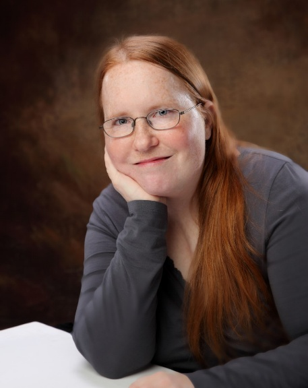 Please provide a link to your university page.
https://apps.csuchico.edu/directory/Employee/ttraver
Please describe the courses/course numbers that you teach.
Women Writers, Literature of the Child, Approaches to Literary Genres, Survey of Later British Literature, British Victorian Literature
Describe your teaching philosophy and any research interests related to your discipline or teaching. I like to tell people “writing is magic!” Putting words on a page is not just a means of communication: it is also a tool for critical thinking. People sometimes underestimate how powerful it can be for students to write through a problem or question, using no tool but their brain and a writing implement, but I have seen this magic at work in the classroom many times over the years. In writing intensive classes like ENGL 261W, my goal is not to teach students how to quickly produce a polished piece of writing. Rather, my goal is to help students think critically, analyze texts, and defend their personal opinions, both verbally and in writing. Grappling directly with words and ideas is an excellent way to help students improve their critical thinking and creativity.