
Measurements, Instrumentation, and Controls
Measurements, Instrumentation, and Controls
Purpose: to help other instructors teaching the same course
Course name/number: ENGR 464
CSU Instructor Open Textbook Adoption Portrait
Abstract: This open textbook is being utilized in a mechanical engineering course for undergraduate students by Joshua P. Steimel at California State Polytechnic University, Humboldt (Cal Poly Humboldt). The open textbook provides a comprehensive set of course-specific lecture notes, worked engineering examples, mathematical derivations, applications, and instructional resources spanning experimental measurement, uncertainty and statistical analysis, Fourier analysis, instrumentation, and feedback control. Topics progress from measurement uncertainty and hypothesis testing through strain gauges and signal analysis and then into transfer functions, stability, time-domain response, PID control, root locus, Bode plots, and the Nyquist stability criterion. The main motivations for adopting and developing an open textbook were to eliminate textbook costs for students, align the learning materials directly with the course, and make it possible to continuously customize and improve the material based on student needs and laboratory activities. Most students access the open textbook online through Engineering LibreTexts, with PDF and print options also available.
Course Title and Number - Measurements, Instrumentation, and Controls. ENGR 464
Brief Description of course highlights: ENGR 464 integrates experimental measurements, instrumentation, data analysis, signal processing, dynamic systems, and feedback control. Students learn principles and practices associated with laboratory and engineering measurements, including measurement uncertainty, experimental statistics, sensor and instrumentation performance, and signal analysis. The course then develops the mathematical framework for feedback control, including Laplace transforms, transfer functions, poles and zeros, stability, time-domain specifications, PID control, root locus, frequency response, Bode plots, and Nyquist analysis. Current course listing: Fall 2026 Engineering class schedule (ENGR 464, 4 units with laboratory)
Student population: The course primarily serves upper-division Mechanical Engineering students at Cal Poly Humboldt and may also serve students in related engineering programs whose academic interests involve measurement systems, instrumentation, modeling, or control.
Students typically enter the course with substantial preparation in mathematics, physics, computational methods, dynamics, and electronic instrumentation. This foundation allows ENGR 464 to integrate mathematical modeling with experimental measurements and physical control systems. Program context: Cal Poly Humboldt Mechanical Engineering, B.S.
The Mechanical Engineering program emphasizes hands-on learning and includes applications ranging from sensors and electro-mechanical machines to robotics, controls, energy systems, and mechanical design.
Learning or student outcomes: Upon successful completion of the course, students should be able to:
- Explain the fundamental components of engineering measurement systems and distinguish among accuracy, precision, sensitivity, resolution, bias, and uncertainty.
- Quantify uncertainty in experimental measurements using confidence intervals, propagation of uncertainty, hypothesis testing, t-tests, p-values, and analysis of variance.
- Analyze time-dependent measurement data using Fourier analysis and discrete Fourier transforms and explain the effects of sampling rate, Nyquist frequency, aliasing, and spectral leakage.
- Explain and apply instrumentation concepts including strain gauges, Wheatstone bridges, sensors, signal conditioning, and data acquisition.
- Develop mathematical models and transfer functions for physical dynamic systems using differential equations and Laplace transforms.
- Analyze system response using poles, zeros, characteristic equations, transient-response specifications, and stability criteria.
- Apply Routh-Hurwitz analysis, root locus, Bode plots, frequency-response methods, and the Nyquist stability criterion to engineering control systems.
- Design and analyze proportional, proportional-derivative, proportional-integral, and PID controllers and evaluate the resulting system performance.
- Conduct engineering experiments, analyze experimental data, quantify uncertainty, compare experimental results with mathematical models, and use engineering judgment to draw defensible conclusions.
- Connect theoretical measurement and control concepts to physical engineering systems and laboratory experiments.
- The sequence of topics in the OER directly supports these outcomes, moving from measurements and statistical analysis through Fourier methods and instrumentation and then through classical feedback-control analysis and design.
Key challenges faced and how resolved: One of the primary challenges was finding a single commercial textbook that matched the unusual breadth and sequencing of ENGR 464. The course combines experimental measurements, uncertainty analysis, statistical methods, signal processing, instrumentation, dynamic-system analysis, and feedback-control design. Traditional textbooks often cover only a portion of this material, requiring students either to purchase multiple resources or to work from materials that do not closely correspond to the course.
Developing the LibreTexts resource made it possible to create one coherent source organized specifically around the way the course is taught. Material can be revised when examples, laboratory activities, software, or course emphasis change. Students can also move directly from lecture material to examples and related resources without having to reconcile different terminology and notation from several textbooks.
Another challenge with OER development is that ancillary materials do not automatically exist in the way they often do for commercial textbooks. I addressed this by developing course-specific examples, problem sets, laboratories, supplementary lecture videos, and other instructional materials alongside the OER.
Syllabus and/or Sample assignment from the course or the adoption: The course syllabus, laboratory assignments, and problem sets are distributed to enrolled students through the course learning-management system. Publicly available instructional content, worked examples, and the primary lecture material can be viewed directly through the Engineering LibreTexts OER. Measurements, Instrumentation, and Controls OER
Textbook Title: Measurements, Instrumentation, and Controls
Brief Description: Measurements, Instrumentation, and Controls is a course-specific Engineering LibreTexts resource for an upper-division mechanical engineering course that integrates experimental measurement and data analysis with classical feedback control. The first portion covers measurement processes, confidence intervals, t-tests, p-values, hypothesis testing, propagation of uncertainty, ANOVA, Fourier analysis, discrete Fourier transforms, sampling, aliasing, spectral leakage, strain gauges, and Wheatstone bridges. The second portion develops Laplace transforms, transfer functions, poles and zeros, system response and stability, time-domain specifications, Routh-Hurwitz analysis, PID control, root locus, frequency response, Bode plots, and the Nyquist stability criterion. The material emphasizes engineering interpretation, worked examples, derivations, and connections to laboratory activities and physical systems. The LibreTexts platform provides modular web access and a Save as PDF option, allowing the resource to be used online or printed as needed.
Please provide a link to the resource
Measurements, Instrumentation, and Controls - Engineering LibreTexts
Authors: Joshua P. Steimel, Cal Poly, Humboldt.
Student access: Students access the required material free of charge through Engineering LibreTexts using a computer, tablet, or mobile device. The resource is linked from the course learning-management system, can be read directly in a browser, and can be saved as a PDF or printed when students prefer an offline copy. No paid access code is required.
Supplemental resources includes: Instructor-created problem sets, laboratory activities, worked examples, computational examples, lecture slides, and course-specific solution materials. Supplementary lecture videos are also available through Joshua Steimel’s instructional YouTube channel. No commercial online homework system is required.
Provide the cost savings from that of a traditional textbook. The primary OER costs students $0. As a current comparison, Pearson lists Feedback Control of Dynamic Systems, 9th edition at $64.98 for six-month eText access. Using the OER therefore saves at least about $65 per student relative to that representative commercial controls text alone. Because ENGR 464 also includes measurements, statistics, instrumentation, and signal analysis that might otherwise require additional references, total avoided textbook costs can be higher.
License*: The resource is openly available through Engineering LibreTexts under a Creative Commons Attribution-NonCommercial-NoDerivatives license (CC BY-NC-ND).
OER/Low-Cost Adoption Process
Please provide an explanation or what motivated you to use this textbook or OER/Low Cost. My primary motivations were to reduce the financial burden on students and to create learning materials that match the actual scope and sequence of ENGR 464. The course crosses several traditional textbook boundaries by combining experimental measurements, statistics and uncertainty, Fourier analysis, instrumentation, dynamic-system modeling, and feedback control. Developing a course-specific OER lets me use consistent notation, align reading directly with lectures and laboratories, add examples when students need additional support, and revise the material as the course evolves. Just as importantly, every student has immediate access to the required material on the first day of class without having to purchase a textbook or access code.
How did you find and select the open textbook for this course? Rather than adopting a single existing open textbook unchanged, I developed and curated a course-specific resource on the Engineering LibreTexts platform. I evaluated the needs of the course and the available commercial and open resources, then organized the OER around the ENGR 464 learning sequence. LibreTexts provided an established open-education platform for publishing, revising, and sharing the material publicly. This approach was especially useful because no single conventional text closely matched the combination of measurement science, instrumentation, signal analysis, and control systems taught in the course.
Sharing Best Practices: I recommend starting with the portions of a course where existing materials are least satisfactory rather than trying to write an entire textbook at once. Lecture notes, worked examples, laboratory instructions, and problem-solving guides can be developed incrementally and later organized into a larger OER. It is also helpful to design for how students actually use online materials: keep sections modular, use clear headings, connect readings directly to assignments and laboratories, and include enough worked examples for students to check their understanding. I have found it most useful to treat OER as a living course resource that improves each time the course is taught. The financial benefit is important, but the pedagogical benefit of being able to tailor the material to the course is equally valuable.
Describe any challenges you experienced, and lessons learned. The main challenge is faculty time. Writing clear explanations, preparing figures, checking derivations, developing examples, and maintaining an online resource require a significant initial investment. A second challenge is that OER does not automatically come with the ancillary materials associated with many commercial textbooks, so problem sets, laboratories, solutions, lecture slides, videos, and computational examples often need to be developed in parallel. The major lesson I have learned is to build iteratively: publish useful material, observe where students struggle, and improve those sections during the next offering. Over time, the resource becomes better aligned with both the students and the course than a static commercial text could be.
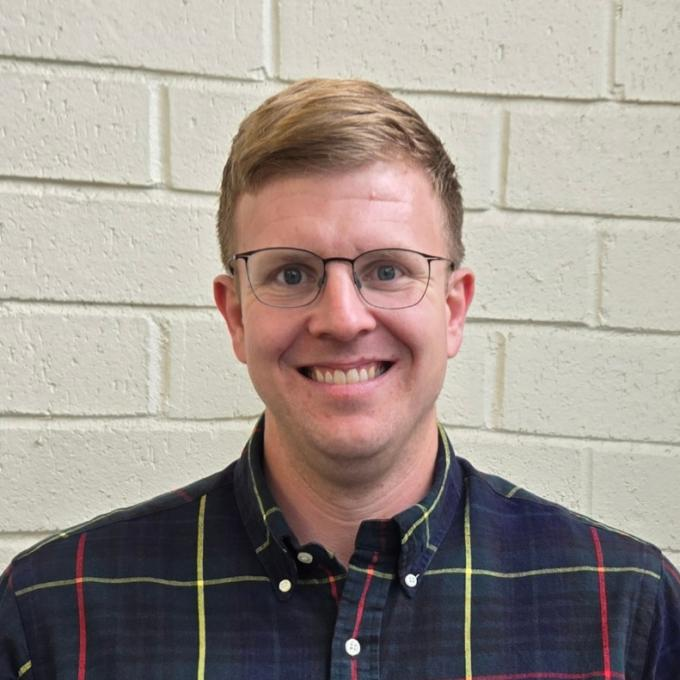
Instructor Name - Joshua P. Steimel, Ph.D.
I am an Associate Professor of Engineering at California State Polytechnic University, Humboldt (Cal Poly Humboldt).
 Please provide a link to your university page.
https://www.humboldt.edu/engineering/joshua-steimel-phd
Please describe the courses/course numbers that you teach.
My teaching spans several areas of mechanical and general engineering. I regularly teach courses in introductory engineering, engineering data analysis, mechanics and materials, measurements and controls, mechanical behavior of materials, capstone design, and polymer physics. Courses listed on my Cal Poly Humboldt faculty profile include:
ENGR 115 Introduction to Engineering; ENGR 322 & Lab Risk and Data Analysis for Engineers; ENGR 330 & Lab Mechanics and Science of Materials; ENGR 464 Measurements, Instrumentation, and Controls; ENGR 468 Mechanical Behavior of Materials; ENGR 492B/ENGR 492CW & Lab Mechanical Engineering Capstone Design I and II; ENGR 492W & Lab Capstone Design Project for Environmental Resources Engineering; and ENGR 498 & Lab Polymer Physics.
Describe your teaching philosophy and any research interests related to your discipline or teaching. My teaching philosophy emphasizes learning engineering by doing engineering. I want students to understand the underlying theory while also seeing how that theory behaves in physical systems, experiments, computational models, and engineering design. I therefore connect mathematical analysis with laboratory measurements, sensors and instrumentation, programming, data acquisition, fabrication, and open-ended design problems whenever possible. Students should leave a course not only knowing how to solve an equation, but also understanding what the result means physically, how it can be measured, which assumptions were required, and how uncertainty affects the conclusions. Open educational resources support this philosophy because they allow the course materials to be organized around the actual progression of the class and connected directly to examples, laboratories, and design activities. My research focuses include bioassay platform development, biomechanical studies, robotics, and controls.