HDFS 3650: Risk & Resilience in Children
HDFS 3650: Risk & Resilience in Children
Purpose: to help other instructors teaching the same course
Course name/number: HDFS 3650
Common Course ID: CRN-81730/81732
CSU Instructor Open Textbook Adoption Portrait
Abstract: This open textbook is being utilized in a HDFS course for undergraduate or graduate students by Tamarah Williams at California State University, Bakersfield. The open textbook provides a brief description about child risk and resilience. The main motivation to adopt an open textbook was reduce the cost for student. Most students access the open textbook in Canvas via a computer, tablet, or mobile device
Course Title and Number - HDFS 3650. Risk and Resilience in Children. (sections 50/55)
Brief Description of course highlights: This course examines risk and resilience in children and families, emphasizing how social location and human diversity influence developmental experiences and outcomes. Students will explore how factors such as age, gender, socioeconomic status, race, ethnicity, ability, family structure, and sexual orientation shape individual and family responses to adversity. Although individuals within particular social groups may share certain experiences, each person’s circumstances, strengths, and needs remain unique. Students will apply developmental theories and research to assess the experiences of children and families facing multiple adversities, identify risk and protective factors, and develop culturally responsive, trauma-informed strategies that support resilience and healthy development.
Prerequisite: Junior standing and completion of HDFS 2000 or HDFS 2500.
Student population: HDFS 3650: Risk and Resilience in Young Children serves students majoring in Human Development and Family Studies and related disciplines, including those interested in careers in early childhood education, social services, family support, counseling, and other professions working with children and families. Students typically transfer students who bring diverse academic backgrounds, professional experiences, and perspectives to the classroom. Their previous preparation varies; some have completed coursework in child development, psychology, sociology, education, or family studies, while others have had limited exposure to the concepts of risk, protective factors, and resilience in early childhood.
The course builds on students' understanding of child development by examining the biological, psychological, social, cultural, and environmental factors that influence young children's development and well-being. Particular attention is given to adverse childhood experiences, family dynamics, poverty, trauma, protective relationships, and the role of families, educators, and communities in promoting resilience.
Students are encouraged to connect developmental theories and research to real-world situations, drawing on their previous coursework, experiences, and professional interests. Through discussions, case studies, and practical applications, the course helps students develop a deeper understanding of the challenges young children and families may face and the strategies that can support positive developmental outcomes.
Learning or student outcomes: Upon successful completion of this course, students will be able to:
- Define and differentiate risk, adversity, trauma, resilience, and protective factors as they relate to child and family development.
- Analyze how adverse childhood experiences, family instability, homelessness, poverty, community violence, and mass trauma influence children’s social, emotional, cognitive, and physical development.
- Explain how early adversity and chronic stress affect brain development, attachment, emotional regulation, and behavior.
- Identify and evaluate individual, family, school, and community protective factors that support resilience throughout childhood.
- Apply developmental theories and research to assess the experiences, strengths, and needs of children and families facing multiple adversities.
- Examine how social location, race, ethnicity, culture, socioeconomic status, family structure, and religious or spiritual beliefs influence developmental experiences and access to support.
- Evaluate the role of early childhood programs, schools, educators, and peer relationships in promoting safety, belonging, and resilience.
- Recognize signs of trauma, bullying, emotional distress, and developmental challenges in young children and elementary-aged students.
- Develop trauma-informed, culturally responsive, and developmentally appropriate strategies to support children experiencing adversity.
- Identify opportunities for collaboration among families, educators, community organizations, and support services to strengthen protective factors and promote healthy development.
- Examine how systemic inequities, discrimination, and barriers to resources affect children’s and families’ experiences of risk and resilience.
- Apply ethical, strengths-based, and inclusive practices when assessing children’s needs, communicating with families, and recommending interventions.
Syllabus and Sample assignments This assignment requires you to develop a comprehensive support plan for a child experiencing adversity in an early childhood or elementary school setting. You will analyze the child’s circumstances, identify developmental and behavioral concerns, and evaluate relevant risk and protective factors. Your plan must include practical classroom strategies, respectful family collaboration, appropriate community resources, and culturally responsive approaches that promote safety, belonging, and resilience. This assignment allows you to apply course concepts to a realistic situation and demonstrate how educators and families can work together to support children facing challenging experiences.
Textbook or OER/Low-cost Title: Stress, Lifestyle and Health
Brief Description: The Department of Human Development and Family Studies (HDFS) supports the use of Open Educational Pedagogies for teaching and learning. Open educational pedagogy is defined as a series of practices which involve engaging students in a course through the development, adaptation, or use of open educational resources. Open pedagogy, also known as open educational practices (OEP), is the use of open educational resources (OER) to support learning, or the open sharing of teaching practices with a goal of improving education and training at the institutional, professional, and individual level.
Please provide a link to the resource
Psychology 2e: Chapter 14: Stress, Lifestyle and Health https://openstax.org/books/psychology-2e/pages/14-introduction
Ager, A. (2013). Annual Research Review: Resilience and child well‐being–public policy implications. Journal of Child Psychology and Psychiatry, 54(4), 488-500. Retrieved from: https://doi.org/10.1111/jcpp.12030
Catalano, R. F., Berglund, M. L., Ryan, J. A., Lonczak, H. S., & Hawkins, J. D. (2004). Positive youth development in the United States: Research findings on evaluations of positive youth development programs. The Annals of the American Academy of Political and Social Science, 591(1), 98-125. Retrieved from: https://doi.org/10.1177/0002716203260102
Evans, G. (2004). The environment of childhood poverty. American Psychologist, 59(2), 77-92. Retrieved from: https://doi.org/10.1037/0003-066X.59.2.77
Kim, S., & Esquivel, G. B. (2011). Adolescent spirituality and resilience: Theory, research, and educational practices. Psychology in the Schools, 48(7), 755-765. Retrieved from: https://doi.org/10.1002/pits.20582
Matsen, A. (2014). Ordinary Magic: Resilience in Development . New York: Guilford Press. Retrieved from:
Masten, A. S., & Narayan, A. J. (2012). Child development in the context of disaster, war, and terrorism: Pathways of risk and resilience. Annual Review of Psychology, 63, 227-257. Retrieved from: https://doi.org/10.1146/annurev-psych-120710-100356
Neblett Jr, E. W., Rivas‐Drake, D., & Umaña‐Taylor, A. J. (2012). The promise of racial and ethnic protective factors in promoting ethnic minority youth development. Child Development Perspectives, 6(3), 295-303 Retrieved from: https://doi.org/10.1111/j.1750-8606.2012.00239.x
Seccombe, K. (2002). “Beating the odds” versus “changing the odds”: Poverty, resilience, and family policy. Journal of Marriage and Family, 64(2), 384-394. Retrieved from: https://doi.org/10.1111/j.1741-3737.2002.00384.x
Zolkoski, S. M., & Bullock, L. M. (2012). Resilience in children and youth: A review. Children and Youth Services Review, 34(12), 2295-2303. Retrieved from:
https://doi.org/10.1016/j.childyouth.2012.08.009
https://onlinelibrary.wiley.com/doi/full/10.1111/jcpp.12030
https://search.proquest.com/docview/61362161/?pq-origsite=primo
https://psycnet.apa.org/doiLanding?doi=10.1037%2F0003-066X.59.2.77
https://search.proquest.com/docview/909822771?pq-origsite=primo
https://srcd.onlinelibrary.wiley.com/doi/full/10.1111/j.1750-8606.2012.00239.x
https://www.jstor.org/stable/3600112?seq=1#metadata_info_tab_contents
https://www.sciencedirect.com/science/article/pii/S0190740912003337
Authors: Ager, A., Catalano, R. F., Berglund, M. L., Ryan, J. A., Lonczak, H. S., & Hawkins, J. D., Evans, G., Kim, S., & Esquivel, G. B., Matsen, A., Masten, A. S., & Narayan, A. J., Neblett Jr, E. W., Rivas‐Drake, D., & Umaña‐Taylor, A. J., Seccombe, K.
Student access: Students access the open textbooks through Canvas as downloadable PDF files, allowing them to read the materials online or save them to their devices for offline access. They will access the information on Canvas and the school library website
Supplemental resources:
National Association for the Education of Young Children- www.naeyc.org
Oregan State University Extension Service: Nurturing resilience in children and families. https://extension.oregonstate.edu/collection/nurturing-resilience-children-families
Grammarly- www.grammerly.com
Provide the cost savings from that of a traditional textbook. $43.40
License*: CC BY-NC-SA
OER/Low-Cost Adoption Process
Please provide an explanation or what motivated you to use this textbook or OER/Low Cost. The main motivation for adopting these open textbooks was to provide students with an affordable and accessible foundation in developmental theories while removing the financial burden of purchasing commercial textbooks. Using the books together connects human development with learning and supports students in moving beyond memorizing theories to understanding their practical applications.
How did you find and select the open textbook for this course? I selected the open textbooks for this course by consulting with colleagues and exploring various Open Educational Resources (OER) websites. I reviewed available textbooks to determine how well their content aligned with the course objectives, learning outcomes, and topics covered throughout the semester. I also considered the accessibility, quality, and relevance of the materials to ensure they would support student learning. Ultimately, I selected the textbooks because they provide comprehensive, relevant content that supports the course curriculum.
Sharing Best Practices: For faculty who are just getting started with Open Educational Resources (OER) or low-cost course materials, I recommend beginning by exploring established OER websites and connecting with colleagues who have experience using open textbooks. Faculty do not necessarily need to find one textbook that covers every topic in their course. Instead, they can use an open textbook as the foundation and supplement it with scholarly articles, videos, PowerPoint presentations, and other resources that support the course learning objectives.
One thing I wish I had known earlier is how much flexibility OER provides. Faculty can select materials that are relevant to their students, incorporate different perspectives, and update supplemental resources as needed. However, it is important to allow sufficient time to review the materials, identify any gaps in content, and organize the resources in Canvas so students can easily access them.
I also recommend considering how students will access the materials. Providing downloadable PDF versions through Canvas allows students to review the readings at their convenience without purchasing an expensive textbook.
Most importantly, I encourage faculty to start small, seek support from colleagues and campus OER resources, and be open to making adjustments. Adopting OER is an ongoing process, and sharing experiences and resources with other faculty can help improve both teaching practices and student learning while making higher education more affordable.
Describe any challenges you experienced, and lessons learned. One of the challenges I experienced when adopting Open Educational Resources (OER) was finding textbooks that covered all the topics and learning objectives of the course. Although the open textbooks provided a strong foundation, some areas required additional resources to ensure students received a comprehensive understanding of the material. To address these gaps, I incorporated scholarly articles, educational videos, PowerPoint presentations, and other supplemental materials that aligned with the course content.
Another challenge was the limited availability of supplemental instructional resources, such as ready-made PowerPoint presentations, interactive activities, and assessment materials that are often included with traditional textbooks. This required additional time to develop and organize resources that would support student learning.
One important lesson I learned is that adopting OER involves more than simply replacing a traditional textbook with a free alternative. It requires careful planning, reviewing materials for accuracy and relevance, and ensuring that the resources align with course objectives. I also learned the importance of organizing materials in Canvas so students can easily access the textbooks and supplemental resources.
Despite these challenges, the experience has been rewarding. OER provides greater flexibility in selecting and adapting instructional materials while reducing textbook costs for students. Moving forward, I plan to continue refining the supplemental resources and incorporating student feedback to improve the overall learning experience.
Instructor Name - Tamarah Williams
I am an HDFS professor at the California State University, Bakersfield.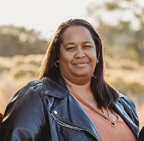 Please provide a link to your university page.
https://www.csub.edu
Please describe the courses/course numbers that you teach. I teach courses in Child and Family Studies (CAFS) and Human Development (HDFS) at California State University, Bakersfield (CSUB). My courses focus on human development across the lifespan, family relationships, parenting, resilience, early childhood development, play, and the social and environmental factors that influence children and families. Courses I regularly teach at CSUB include:
- HDFS 1100 – Introduction to Child, Adolescent, and Family Studies
- HDFS 2000 – Foundations in Developmental Theory
- HDFS 3110 – Infant/Toddler Development
- HDFS 3500 – Child Guidance, Supervision, and Support
- HDFS 3560 – Aging and the Family
- HDFS 3600 – Parenting and Family Relations
- HDFS 3650 – Risk and Resilience in Children
- HDFS 3800 – Multiple Perspectives on the Importance of Play in Early Childhood Education
Describe your teaching philosophy and any research interests related to your discipline or teaching. My teaching philosophy is grounded in the belief that education should be inclusive, engaging, and meaningful. As an educator with a background in early childhood education, educational leadership, and advocacy, I believe that teaching extends beyond delivering course content. It involves creating an environment where students feel supported, challenged, and encouraged to develop the knowledge, confidence, and skills necessary for academic and professional success.
My experience in education and leadership has shaped my approach to teaching and mentoring students. I believe effective educators are also leaders who inspire growth, encourage collaboration, and create opportunities for others to succeed. Leadership in education involves recognizing individual strengths, supporting diverse learning needs, and helping students develop the critical-thinking and problem-solving skills necessary to become effective professionals and advocates within their communities.
In my classroom, I emphasize connecting developmental theories and research to real-world experiences. Through interactive discussions, collaborative activities, case studies, and reflective assignments, I encourage students to examine different perspectives and apply their understanding to situations involving children, families, and communities. I believe students learn best when they can make meaningful connections between academic concepts and practical experiences.
Mentorship is an important part of my teaching philosophy. I strive to build positive relationships with students while maintaining clear expectations and encouraging personal responsibility. I recognize that students bring different educational experiences, cultural perspectives, and responsibilities into the classroom. My goal is to provide guidance, constructive feedback, and opportunities for growth while encouraging students to take an active role in their learning.
My background in educational leadership and advocacy has also strengthened my commitment to equity and accessibility in higher education. I believe educators have a responsibility to identify barriers to learning and incorporate instructional practices that support student success. This includes using diverse teaching strategies, providing accessible course materials, and incorporating Open Educational Resources (OER) to help reduce the financial burden associated with higher education.
I also believe that education plays an important role in preparing future leaders and advocates. I encourage students to develop an understanding of how social, cultural, economic, and environmental factors influence human development and family experiences. By promoting critical thinking, cultural awareness, and professional responsibility, I hope to prepare students to make informed decisions and contribute positively to the communities they serve.
Ultimately, my goal as an educator is to create a learning environment that balances academic expectations with encouragement, mentorship, and meaningful engagement. I want students to leave my classroom not only with a stronger understanding of course content but also with the confidence, leadership skills, and commitment to lifelong learning necessary to make a positive difference in the lives of children, families, and communities.