
HDFS 3800 Multiple Perspectives on the Importance of Play in
Early Childhood Education
HDFS 3800 Multiple Perspectives on the Importance of Play in
Early Childhood Education
Purpose: to help other instructors teaching the same course
Course name/number: HDFS 3800
Common Course ID: 81733/81734
CSU Instructor Open Textbook Adoption Portrait
Abstract: This open textbook is being utilized in a HDFS course for undergraduate or graduate students by Tamarah Williams at California State University, Bakersfield.
Course Title and Number - HDFS 3800: Multiple Perspectives on the Importance of Play in Early Childhood Education
Brief Description of course highlights: This course examines multiple perspectives on play and its role in children’s growth, learning, and overall development. Students will explore how children’s play experiences are influenced by cultural values, family relationships, educational settings, community expectations, and socioeconomic conditions. The course will address major theories of play, different types and stages of play, and the ways play supports children’s physical, cognitive, language, social, and emotional development. Students will also examine the role of families, educators, and learning environments in creating inclusive, developmentally appropriate, and meaningful opportunities for play. Through course readings, observations, discussions, and assignments, students will connect research and theory to practices that support children from diverse backgrounds and with varying abilities and needs.
Prerequisites: Junior standing, successful completion of HDFS 2000, and successful completion of any three upper-division HDFS courses.
Student population: HDFS 3800: Multiple Perspectives on Play in Early Childhood serves students majoring in Human Development and Family Studies and related disciplines, including those interested in careers in early childhood education, child development, family services, and other professions working with young children and families. Students are typically transfer students who bring diverse academic backgrounds, professional experiences, and perspectives to the classroom. Their previous preparation varies; some have completed coursework in child development, psychology, education, or family studies, while others have had limited exposure to the theoretical perspectives and surrounding play in early childhood.
The course builds on students' existing knowledge of child development by exploring the importance of play from multiple theoretical, cultural, social, and developmental perspectives. Students examine how play contributes to children's cognitive, physical, social, emotional, and language development, as well as how family environments, cultural practices, and educational settings influence children's play experiences.
Students are encouraged to connect theories and research on play to their previous coursework, personal experiences, and professional goals. Through discussions, observations, and practical applications, the course helps students develop a deeper understanding of the role of play in children's learning and development and its importance in creating developmentally appropriate and inclusive learning environments.
Learning or student outcomes: Upon successful completion of this course, the candidate will be able to:
CO1: Identify historical and contemporary educational theorists and their views on play in association with learning.
CO2: Compare and contrast diverse styles of play, their benefits, and their cultural impact.
CO3: Describe and reflect on how play addresses areas of child development, including physical, social, emotional, cognitive, and language development.
CO4: Identify how play supports the standards for effective early childhood education.
CO5: Explain the role of the teacher in creating an environment that promotes learning through play.
Textbook or OER/Low-cost Title:
Brief Description: The Department of Human Development and Family Studies (HDFS) supports the use of Open Educational Pedagogies for teaching and learning. Open educational pedagogy is defined as a series of practices which involve engaging students in a course through the development, adaptation, or use of open educational resources. Open pedagogy, also known as open educational practices (OEP), is the use of open educational resources (OER) to support learning, or the open sharing of teaching practices with a goal of improving education and training at the institutional, professional, and individual level.
Please provide a link to the resource
Fleer, M., Allen, K.-A., Clerc-Georgy, A., Disney, L., Li, L., McKinley, L., Quinones, G., Rai, P., Scull, J., & Suryani, A. (2024). Why play works: Conceptual Play Worlds inspiring learning, imagination and creativity in education. Monash University. https://doi.org/10.60754/KSP5-1529
https://monash.studium.pub/why-play-works/
Pramling, N., Wallerstedt, C., Lagerlöf, P., Björklund, C., Kultti, A., Palmér, H., Magnusson, M., Thulin, S., Jonsson, A., & Pramling Samuelsson, I. (2019). Play-responsive teaching in early childhood education. Springer. https://doi.org/10.1007/978-3-030-15958-0 https://link.springer.com/book/10.1007/978-3-030-15958-0?utm
Baumer, S., Ferholt, B., & Lecusay, R. (2005). Promoting narrative competence through adult–child joint pretense: Lessons from the Scandinavian educational practice of playworld. Cognitive Development, 20(4), 576–590. https://doi.org/10.1016/j.cogdev.2005.08.003 https://www.sciencedirect.com/science/article/abs/pii/S0885201405000602?utm
Bodrova, E., & Leong, D. J. (2015). Vygotskian and post-Vygotskian views on children’s play. American Journal of Play, 7(3), 371–388. https://files.eric.ed.gov/fulltext/EJ1070266.pdf?utm
Coplan, R. J., Rubin, K. H., & Findlay, L. C. (2006). Social and nonsocial play. In D. P. Fromberg & D. Bergen (Eds.), Play from birth to twelve: Contexts, perspectives, and meanings (2nd ed., pp. 75–86). Routledge. https://www.researchgate.net/publication/235910231_Social_and_Nonsocial_Play
Doctoroff, S. (2001). Adapting the physical environment to meet the needs of all young children for play. Early Childhood Education Journal, 29(2), 105–109. https://doi.org/10.1023/A:1012524929004 https://link.springer.com/article/10.1023/A:1012524929004?utm
Giske, R., Ugelstad, I. B., Meland, A. T., Kaltvedt, E. H., Eikeland, S., Tønnessen, F. E., & Reikerås, E. K. L. (2018). Toddlers’ social competence, play, movement skills and well-being: An analysis of their relationship based on authentic assessment in kindergarten. European Early Childhood Education Research Journal, 26(3), 362–374. https://doi.org/10.1080/1350293X.2018.1463904 https://www.tandfonline.com/doi/full/10.1080/1350293X.2018.1463904?utm
Junge, C., Valkenburg, P. M., Deković, M., & Branje, S. (2020). The building blocks of social competence: Contributions of the Consortium of Individual Development. Developmental Cognitive Neuroscience, 45, Article 100861. https://doi.org/10.1016/j.dcn.2020.100861 https://pmc.ncbi.nlm.nih.gov/articles/PMC7509192/?utm
Kelly-Vance, L., & Ryalls, B. O. (2008). Best practices in play assessment and intervention. In A. Thomas & J. Grimes (Eds.), Best practices in school psychology V (Vol. 2, pp. 549–560). National Association of School Psychologists.
https://www.academia.edu/2236966/33_Best_Practices_in_Play_Assessment_and_Intervention?utm
Mielonen, A. M., & Paterson, W. (2009). Developing literacy through play. Journal of Inquiry & Action in Education, 3(1), 15–46. https://digitalcommons.buffalostate.edu/jiae/vol3/iss1/2/?utm
Rettig, M. (1995). Play and cultural diversity. The Journal of Educational Issues of Language Minority Students, 15 https://ncela.ed.gov/sites/default/files/legacy/files/rcd/BE020476/Play_and_Cultural_Diversity.pdf?utm
Saracho, O. N., & Spodek, B. (1995). Children’s play and early childhood education: Insights from history and theory. Journal of Education, 177(3), 129–148. https://doi.org/10.1177/002205749517700308
Student access: Students access the open textbooks through Canvas as downloadable PDF files, allowing them to read the materials online or save them to their devices for offline access. They also are able to access supplemental reading through the school library website.
Supplemental resources:
National Association for the Education of Young Children- www.naeyc.org
Grammarly- www.grammerly.com
Provide the cost savings from that of a traditional textbook. $33.95
License*: CC BY-NC-SA
OER/Low-Cost Adoption Process
Please provide an explanation or what motivated you to use this textbook or OER/Low Cost. The main motivation for adopting these open textbooks was to provide students with an affordable and accessible foundation in developmental theories while removing the financial burden of purchasing commercial textbooks. Using the books together connects human development with learning and supports students in moving beyond memorizing theories to understanding their practical applications.
How did you find and select the open textbook for this course? I selected the open textbooks for this course by consulting with colleagues and exploring various Open Educational Resources (OER) websites. I reviewed available textbooks to determine how well their content aligned with the course objectives, learning outcomes, and topics covered throughout the semester. I also considered the accessibility, quality, and relevance of the materials to ensure they would support student learning. Ultimately, I selected the textbooks because they provide comprehensive, relevant content that supports the course curriculum.
Sharing Best Practices: For faculty who are just getting started with Open Educational Resources (OER) or low-cost course materials, I recommend beginning by exploring established OER websites and connecting with colleagues who have experience using open textbooks. Faculty do not necessarily need to find one textbook that covers every topic in their course. Instead, they can use an open textbook as the foundation and supplement it with scholarly articles, videos, PowerPoint presentations, and other resources that support the course learning objectives.
One thing I wish I had known earlier is how much flexibility OER provides. Faculty can select materials that are relevant to their students, incorporate different perspectives, and update supplemental resources as needed. However, it is important to allow sufficient time to review the materials, identify any gaps in content, and organize the resources in Canvas so students can easily access them.
I also recommend considering how students will access the materials. Providing downloadable PDF versions through Canvas allows students to review the readings at their convenience without purchasing an expensive textbook.
Most importantly, I encourage faculty to start small, seek support from colleagues and campus OER resources, and be open to making adjustments. Adopting OER is an ongoing process, and sharing experiences and resources with other faculty can help improve both teaching practices and student learning while making higher education more affordable.
Describe any challenges you experienced, and lessons learned. One of the challenges I experienced when adopting Open Educational Resources (OER) was finding textbooks that covered all the topics and learning objectives of the course. Although the open textbooks provided a strong foundation, some areas required additional resources to ensure students received a comprehensive understanding of the material. To address these gaps, I incorporated scholarly articles, educational videos, PowerPoint presentations, and other supplemental materials that aligned with the course content.
Another challenge was the limited availability of supplemental instructional resources, such as ready-made PowerPoint presentations, interactive activities, and assessment materials that are often included with traditional textbooks. This required additional time to develop and organize resources that would support student learning.
One important lesson I learned is that adopting OER involves more than simply replacing a traditional textbook with a free alternative. It requires careful planning, reviewing materials for accuracy and relevance, and ensuring that the resources align with course objectives. I also learned the importance of organizing materials in Canvas so students can easily access the textbooks and supplemental resources.
Despite these challenges, the experience has been rewarding. OER provides greater flexibility in selecting and adapting instructional materials while reducing textbook costs for students. Moving forward, I plan to continue refining the supplemental resources and incorporating student feedback to improve the overall learning experience.
Instructor Name - Tamarah Williams
I am an HDFS professor at the California State University, Bakersfield.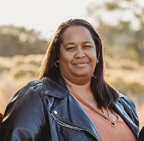 Please provide a link to your university page.
https://www.csub.edu
Please describe the courses/course numbers that you teach. I teach courses in Child and Family Studies (CAFS) and Human Development (HDFS) at California State University, Bakersfield (CSUB). My courses focus on human development across the lifespan, family relationships, parenting, resilience, early childhood development, play, and the social and environmental factors that influence children and families. Courses I regularly teach at CSUB include:
- HDFS 1100 – Introduction to Child, Adolescent, and Family Studies
- HDFS 2000 – Foundations in Developmental Theory
- HDFS 3110 – Infant/Toddler Development
- HDFS 3500 – Child Guidance, Supervision, and Support
- HDFS 3560 – Aging and the Family
- HDFS 3600 – Parenting and Family Relations
- HDFS 3650 – Risk and Resilience in Children
- HDFS 3800 – Multiple Perspectives on the Importance of Play in Early Childhood Education
Describe your teaching philosophy and any research interests related to your discipline or teaching. My teaching philosophy is grounded in the belief that education should be inclusive, engaging, and meaningful. As an educator with a background in early childhood education, educational leadership, and advocacy, I believe that teaching extends beyond delivering course content. It involves creating an environment where students feel supported, challenged, and encouraged to develop the knowledge, confidence, and skills necessary for academic and professional success.
My experience in education and leadership has shaped my approach to teaching and mentoring students. I believe effective educators are also leaders who inspire growth, encourage collaboration, and create opportunities for others to succeed. Leadership in education involves recognizing individual strengths, supporting diverse learning needs, and helping students develop the critical-thinking and problem-solving skills necessary to become effective professionals and advocates within their communities.
In my classroom, I emphasize connecting developmental theories and research to real-world experiences. Through interactive discussions, collaborative activities, case studies, and reflective assignments, I encourage students to examine different perspectives and apply their understanding to situations involving children, families, and communities. I believe students learn best when they can make meaningful connections between academic concepts and practical experiences.
Mentorship is an important part of my teaching philosophy. I strive to build positive relationships with students while maintaining clear expectations and encouraging personal responsibility. I recognize that students bring different educational experiences, cultural perspectives, and responsibilities into the classroom. My goal is to provide guidance, constructive feedback, and opportunities for growth while encouraging students to take an active role in their learning.
My background in educational leadership and advocacy has also strengthened my commitment to equity and accessibility in higher education. I believe educators have a responsibility to identify barriers to learning and incorporate instructional practices that support student success. This includes using diverse teaching strategies, providing accessible course materials, and incorporating Open Educational Resources (OER) to help reduce the financial burden associated with higher education.
I also believe that education plays an important role in preparing future leaders and advocates. I encourage students to develop an understanding of how social, cultural, economic, and environmental factors influence human development and family experiences. By promoting critical thinking, cultural awareness, and professional responsibility, I hope to prepare students to make informed decisions and contribute positively to the communities they serve.
Ultimately, my goal as an educator is to create a learning environment that balances academic expectations with encouragement, mentorship, and meaningful engagement. I want students to leave my classroom not only with a stronger understanding of course content but also with the confidence, leadership skills, and commitment to lifelong learning necessary to make a positive difference in the lives of children, families, and communities.