
HDFS 3600: Parenting and Family Relations
HDFS 3600: Parenting and Family Relations
Purpose: to help other instructors teaching the same course
Course name/number: HDFS 3600 Parenting and Family Relations
Common Core ID: CRN-81724
CSU Instructor Open Textbook Adoption Portrait
Abstract: This open textbook is being utilized in a HDFS course for undergraduate or graduate students by Kerry Wallace at California State University, Bakersfield. The open textbook provides a brief description of highlights and any instructor supplements. The main motivation to adopt an open textbook was to reduce the cost for students. Most students access the open textbook in via computer, tablet, or mobile device.
Course Title and Number - HDFS 3600 Parenting and Family Relations Culture (section 60)
Brief Description of course highlights: HDFS 3600 Parenting and Family Relations (3 Semester Units) “This course examines the family as the child's first educator. Student will study models of family systems, parenting strategies, community programs and experiences in child service programs, schools, and communities that support and recognize the family as an integral part of the child's educational experience. A specific emphasis will be on parent education, interpersonal communication, and family systems awareness. Prerequisite: Either CAFS 2000 and A2 or otherwise in the Sociology--Human Services concentration.” CSUB catalog
Student population: The student population in HDFS 3600 consists of a mix of students who are exploring the field and students with a clearer career interest in working with children and families. Most students are undergraduates working toward degrees in child development, social work, liberal studies, and special education. The class generally serves a large Latino student population and many first-generation students.
Learning or student outcomes: Upon successful completion of this course, the candidate will be able to:
- Demonstrate an understanding of and discuss theories that support healthy family systems.
- Demonstrate an understanding of models of family systems and healthy parenting strategies.
- Identify and discuss the developmental stages of individuals within the family system.
- Be able to write academically and reflectively about factors that are healthy for members of a family system and those factors that are not healthy to family members.
Syllabus and/or Sample assignment from the course or the adoption: Community Support Project (100 points):Students will research local resources for parent/family support. Students will determine what resources are available in the community, the needs addressed by these resources, and build a presentation to share with the class highlighting their findings.(CC:1, 4)
Textbook or OER/Low-cost Title:
The readings for HDFS 3600 are a collection of articles, journal publications, textbook chapters, and websites depending on the learning objective for that week. The topics include but are not limited to: Historical influences of childrearing, cultural influences and parenting styles, family structures, socialization, and changes in parenting as a child develops from infancy all the way to launching into adulthood.
Brief Description: Open Educational Resources (OER) and Zero Cost Course Materials (ZCCM) - The Department of Child, Adolescent, and Family Studies has adopted OER and ZCCM materials for all courses. The materials required to complete course readings are posted on CANVAS to avoid further expense for the students.
Link to resources: https://csub.box.com/s/dt18qt4pi4w924j99ldk506f9pa9k40m
Authors: The authors vary each week
Student access: They access the readings via Canvas.
Supplemental resources: The students have access to materials and slides that I have created that support the topics each week. I have also integrated TED Talks and information or activities from sites such as the LearningDisabilitiesAssociation.org
Provide the cost savings from that of a traditional textbook. The cost of the traditional textbook for this course is $156.50.
License*: CC BY-NC-SA
OER/Low-Cost Adoption Process
Please provide an explanation or what motivated you to use this textbook or OER/Low Cost. Many of the students in my classes are working full or part-time jobs and receiving financial aid for their education. Alleviating the textbook costs for a student can lead to significant savings. Using OER/Low-cost materials not only makes it easier for students to access what they need; it also allows instructors to tailor readings to a course.
How did you find and select the open textbook for this course? For this course, I did take part in some training on locating resources through our campus library. Then, as a department, we worked together to gather appropriate resources that related to the course work. Once compiled, I read through the articles and materials in our department BOX files, and made the final decisions about what would best meet the needs of the course objectives.
Sharing Best Practices: Check that the material matches the course's learning outcomes, student level, and topics, not just the course title. Review the author or publisher, evidence, currency, clarity, and whether the resource works well for your students. OER should be evaluated just like regular textbooks. Review the material for updates and revise it if needed. The key is choosing materials that fit the specific learning outcomes and students, not adopting a resource simply because it is free.
Describe any challenges you experienced, and lessons learned. One of the biggest challenges I have experienced with open educational resources (OER) is finding materials that align with course objectives. This is particularly true when it is the first time a course is taught. Textbooks typically provide ancillary materials and a scope and sequence that help guide the flow of a course. Without a textbook, instructors must determine the topics, select activities, and organize the course sequence while also finding OER materials that meet the course’s needs.
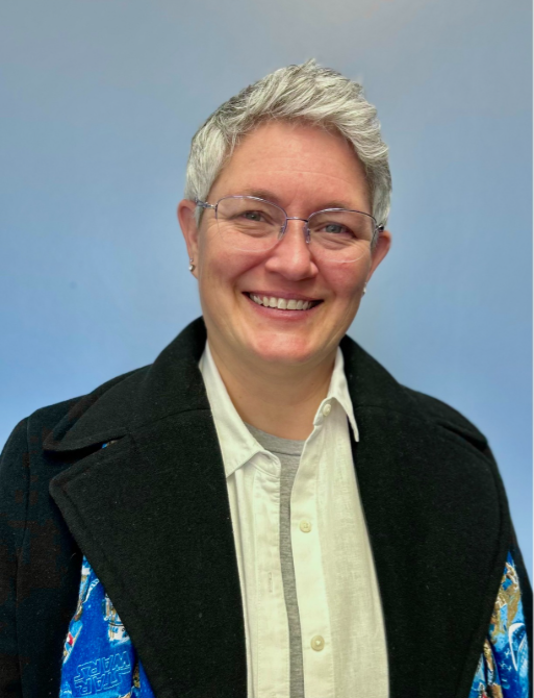
Instructor Name - Kerry Wallace
I am a HDFS professor (Lecturer) at the California State University, Bakersfield
 Please provide a link to your university page.
https://www.csub.edu
Please describe the courses/course numbers that you teach. HDFS 2800, HDFS 3200, HDFS 3600
Describe your teaching philosophy and any research interests related to your discipline or teaching. As an educator, my areas of interest are focused on reading and literacy development. My teaching philosophy is grounded in the belief that all students can learn and that their diversity in terms of identities, experiences, and perspectives enrich the university classroom. I view multicultural education as essential to the preparation of future teachers and professionals working with diverse families.
I strive to connect theory with practice through hands-on learning, collaboration, and reflection. I believe aspiring teachers learn best when they can actively explore instructional strategies and apply their knowledge. I model the practices I hope my students will bring to their own classrooms by creating a positive and engaging environment.