HDFS 2080: Child, Family, and Community
HDFS 2080: Child, Family, and Community
Purpose: to help other instructors teaching the same course
Course name/number: HDFS 2080
CRN- 81626
CSU Instructor Open Textbook Adoption Portrait
Abstract: This open textbook is being utilized in a HDFS course for undergraduate or graduate students by Dr. Anna Catalan at California State University, Bakersfield. The open textbook provides a brief description of highlights and any instructor supplements. The main motivation to adopt an open textbook was reduce the cost for material for the students. Most students access the open textbook in electronically through canvas in the form of a PDF file.
HDFS 2080: Child, Family, and Community
Brief Description of course highlights: An introduction to various roles of and interactions among and between children, families, and community systems. This approach to understanding the interaction of child, family, and community will emphasize an appreciation for diverse cultural, socioeconomic, and lifestyle experiences. Students will become aware of individual and family requirements, social issues, and available support programs in the local area. Students will engage in program analysis and assessment of program effectiveness and quality in light of family needs and community priorities.
Student population: Students who take this course have the following majors: HDFS, Psychology, Sociology, and Liberal Studies. Most students taking this course are 3rd and 4th year students.
Learning or student outcomes:
- Through reading, discussion, class-participation and observation, students will demonstrate knowledge in the
- Through reading, discussion, class-participation and observation, students will:
- Acquire knowledge concerning various roles of children, families, and community systems
- Discuss factors concerning the interaction of child, family, and community
- Write academically and reflectively about program effectiveness and quality in respect to family needs and community priorities.
Syllabus and/or Sample assignment from the course or the adoption: Estimated student workload: To succeed in this class, you should allow at least 2 hours outside of class for every hour that is spent in class to complete your preparation, studying, researching, writing, etc. Because this class is 3 units class, it is expected that you will spend at least 6 hours a week outside of class completing the coursework successfully
Textbook or OER/Low-cost Title: Child, Family and Community readings
Brief Description: Integration and shared knowledge between students by researching and putting together Community Resource Agencies to share community agencies within the community as a resource for children and families.
Please provide a link to the resource
Bhadha, B. (2023). Child Developmental Psychology- Topical Approach. ASCCC OERI Program. Pasadena City College. Child Developmental Psychology - Topical Approach - Social Sci LibreTexts
Esquivel, K., Elam, E., Paris,J., & Tafoya,M.(2020). The role of equity and diversity in early childhood Education (A. Johnson, T. Radtke, & A. Gavilan, Eds.). ASCCC OERI Program. College of the Canyons. The Role of Equity and Diversity in Early Childhood Education 1e (Esquivel, Elam, Paris, & Tafoya) - Social Sci LibreTexts
Giovannini, J. (2025). Children, Families, School, and Communities. Holyoke Community College. Davis, CA: Open Textbook Library. Children, Families, Schools, and Communities (Giovannini) - Social Sci LibreTexts
Laff, R., & Ruiz, W. (2019). Child, Family, and Community. Minneapolis, MN: Open Textbook Library.
Child, Family, and Community (Laff and Ruiz) - Social Sci LibreTexts
Laff, R., & Ruiz, W. (2024). Child, Family, and Community: The Socialization of Diverse Children. College of the Canyons. Open Textbook Library. Child Family Community: The Socialization of Diverse Children - Social Sci LibreTexts
Authors: : Bhadha, B., Esquivel, K., Elam, E., Paris, J., & Tafoya, M., Giovannini, J., Laff, R., & Ruiz, W
Student access: They will access the material via canvas
Provide Cost savings from that of a traditional textbook. $99.99
License: CC BY-NC-SA
OER/Low-Cost Adoption Process
Provide an explanation or what motivated you to use this textbook or OER/Low-Cost option. Save students money, improve the learning materials, or customize materials for special needs, etc.
How did you find and select the open textbook for this course? To find Open textbook resources for the course I reviewed OER sites like Libretext and Merlot, I read peer-reviews and consulted with colleagues and faculty.
Sharing Best Practices: Reving websites where there are Free Textbooks for students to utilize and also have access to. Some of those sites are: libretext and Merlot.
Describe any challenges you experienced, and lessons learned.A challenge is making sure the students do have access to the OER books with no restrictions. Another challenge is finding OER books that actually meet the needs and themes of the course.
Instructor Name - Anna Catalan
I am a HD-CAFS Lecturer/Full-time Faculty at the California State University, Bakersfield.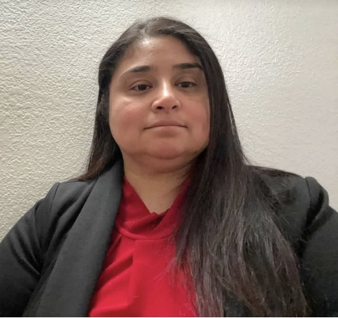 Please provide a link to your university page.
https://www.csub.edu
Please describe the courses/course numbers that you teach.
HDFS 3110: This course focuses on growth and development from conception into the preschool years. This course examines the historical context for the modern conception of child development. Course emphasis is given to contemporary research in physiological and motor development, socio-emotional development, cognitive development, language and communication development, health and nutrition, child-rearing practices, and infant stimulation. The class will highlight a social-historical-contextual approach to the development of young children and families.
HDFS 3140: This course in human development will examine theoretical and conceptual frameworks for the study of the social, emotional/psychological, biological/physical, cognitive, language/communicative, and aesthetic aspects of human development during middle childhood and adolescence. Development within the various contexts of contemporary adolescents' and school-aged children's cultural, familial, educational, and socioeconomic backgrounds will be examined.
HDFS 3300: This course provides an overview of theoretical frameworks on multilingual acquisition and focuses on the development of children who are multilingual learners (MLLs), characteristics of MLLs, evidence-based teaching practices for supporting MLLs, and assessment/observation strategies when working with MLLs.
HDFS 3550: This class in human development will examine theoretical and conceptual frameworks for the study of the social, emotional/psychological, biological/physical, cognitive, genetic, religious, cultural, gender, and socioeconomics of adulthood and the aging process. The course will examine aging through different theoretical lenses, as well as the major physical changes seen in aging. The course will also focus on the mind and brain, and how development can proceed in these areas. To round out the developmental process of aging, the course will address social and behavioral facets of the study of adulthood such as personality, relationships, and the end of life. The emphasis will be on how choice affects the developmental trajectories or long-term outcomes in all these areas.
Describe your teaching philosophy and any research interests related to your discipline or teaching. I strongly believe that students learn through different learning styles and as such it is my responsibility to ensure numerous options to assess understanding of course content among adult learners. Depending on the course I plan activities, such as brief writing assignments that can help them think critically about their learning. I want to ensure that students are processing and learning what is being taught. I also plan and implement lessons that clearly identify the lesson objective, strategies for effective student engagement, and assessment options to measure student mastery. This helps me teach with focus and clarity. I also believe that students need to be included and hands-on as they learn and that is why I include activities such as group work and interactive lectures where students participate in their own learning. I have also developed alternative types of assessment such as; projects, portfolios, presentations, and writing assignments and/or research papers to traditional exams construction. I believe that through practice I can make a difference in future educators and then maybe there can be a lower teacher turnover rate because early childhood educators will understand the expectations of working with children and families.