
HDFS 3140: Adulthood & Aging (sec 01)
HDFS 3140: Adulthood & Aging (sec 01)
Purpose: to help other instructors teaching the same course
Course name/number: HDFS 3140
CRN- 81682
CSU Instructor Open Textbook Adoption Portrait
Abstract: This open textbook is being utilized in a HDFS course for undergraduate or graduate students by Dr. Anna Catalan at California State University, Bakersfield. The open textbook provides a brief description of highlights and any instructor supplements. The main motivation to adopt an open textbook was reduce the cost for material for the students. Most students access the open textbook in electronically through canvas in the form of a PDF file.
Course Title and Number - HDFS 3140: Adulthood and Aging (section 01)
Brief Description of course highlights: This class in human development will examine theoretical and conceptual frameworks for the study of the social, emotional/psychological, biological/physical, cognitive, language/communicative, and aesthetic aspects of human development during middle childhood and adolescence. Development within the various contexts of contemporary adolescents' and school-aged children's cultural, familial, educational, and socioeconomic backgrounds will be examined. Prerequisite: GE Area 1A English Composition (A2); HDFS 2000 (C- or higher).
Student population: Students who take this course have the following majors: HDFS, Psychology, Sociology, and Liberal Studies. Most students taking this course are 3rd and 4th year students.
Learning or student outcomes: Upon successful completion of this course, the student will be able to:
1. Theories on school-age child development and adolescent development.
2. Fundamental changes of middle childhood and adolescence in biological, physical, cognitive,
language, social, and psychological areas.
3. Contextual influence in middle childhood and adolescence.
4. Ability to draw links between developmental theory, research, and practice.
5. Understanding of human behavior as a function of diversity and multicultural influences.
Textbook or OER/Low-cost Title: Adulthood and Aging readings
Brief Description: Students complete a Research Paper which integrates different topics reviewed throughout the course.
Please provide a link to the resource
Bhadha, B. (2026). Child Developmental Psychology-Topical Approach. OER Libre Text Project. U.C. Davis. Child Developmental Psychology - Topical Approach - Social Sci LibreTexts
Lally, M., & Valentine-French, S. (2019). Lifespan Development: A psychological perspective (2nd ed.). San Francisco, California: Creative Commons Publisher. Lifespan Development - A Psychological Perspective 2e (Lally and Valentine-French) - Social Sci LibreTexts
Lally, M., & Valentine-French, S. (2026). Psych 24. OER Libre Text Project. U.C. Davis. Psych 24 shell (Lally and Valentine-French) - Social Sci LibreTexts
Morales, F. (2026). Introduction to Public Health. OER Libre Text Project. U.C. Davis. Introduction to Public Health (Morales) - Social Sci LibreTexts
Paris, J., Ricardo, A., & Raymnd D., (2019). Child Growth and Development (Version 1.2). ASCCC OERI Program. College of the Canyons. Child Growth and Development (Paris, Ricardo, Rymond, and Johnson) - Social Sci LibreTexts
Stephens, C., Peterson, G., & Eyrich, S. (2021). Principles and Practices of Teaching Young Children (Version 1.1). ASCCC OERI Program. College of the Canyons,.Principles and Practices of Teaching Young Children (Stephens et al.) - Social Sci LibreTexts
Student access: They will access the material via canvas
Supplemental resources: National Association for the Education of Young Children- www.naeyc.org
Helpful Website: Grammarly- www.grammerly.com
Provide the cost savings from that of a traditional textbook. $65.75
License: CC BY-NC-SA
OER/Low-Cost Adoption Process
Provide an explanation or what motivated you to use this textbook or OER/Low-Cost option. Save students money, improve the learning materials, or customize materials for special needs, etc.
How did you find and select the open textbook for this course? To find Open textbook resources for the course I reviewed OER sites like Libretext and Merlot, I read peer-reviews and consulted with colleagues and faculty.
Sharing Best Practices: Reving websites where there are Free Textbooks for students to utilize and also have access to. Some of those sites are: libretext and Merlot.
Describe any challenges you experienced, and lessons learned. A challenge is making sure the students do have access to the OER books with no restrictions. Another challenge is finding OER books that actually meet the needs and themes of the course.
Instructor Name - Anna Catalan
I am a HD-CAFS Lecturer/Full-time Faculty at the California State University, Bakersfield.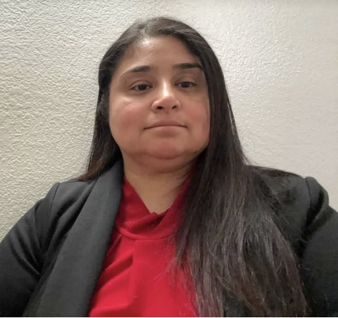 Please provide a link to your university page.
https://www.csub.edu
Please describe the courses/course numbers that you teach.
HDFS 3110: This course focuses on growth and development from conception into the preschool years. This course examines the historical context for the modern conception of child development. Course emphasis is given to contemporary research in physiological and motor development, socio-emotional development, cognitive development, language and communication development, health and nutrition, child-rearing practices, and infant stimulation. The class will highlight a social-historical-contextual approach to the development of young children and families.
HDFS 3140: This course in human development will examine theoretical and conceptual frameworks for the study of the social, emotional/psychological, biological/physical, cognitive, language/communicative, and aesthetic aspects of human development during middle childhood and adolescence. Development within the various contexts of contemporary adolescents' and school-aged children's cultural, familial, educational, and socioeconomic backgrounds will be examined.
HDFS 3300: This course provides an overview of theoretical frameworks on multilingual acquisition and focuses on the development of children who are multilingual learners (MLLs), characteristics of MLLs, evidence-based teaching practices for supporting MLLs, and assessment/observation strategies when working with MLLs.
HDFS 3550: This class in human development will examine theoretical and conceptual frameworks for the study of the social, emotional/psychological, biological/physical, cognitive, genetic, religious, cultural, gender, and socioeconomics of adulthood and the aging process. The course will examine aging through different theoretical lenses, as well as the major physical changes seen in aging. The course will also focus on the mind and brain, and how development can proceed in these areas. To round out the developmental process of aging, the course will address social and behavioral facets of the study of adulthood such as personality, relationships, and the end of life. The emphasis will be on how choice affects the developmental trajectories or long-term outcomes in all these areas.
Describe your teaching philosophy and any research interests related to your discipline or teaching. I strongly believe that students learn through different learning styles and as such it is my responsibility to ensure numerous options to assess understanding of course content among adult learners. Depending on the course I plan activities, such as brief writing assignments that can help them think critically about their learning. I want to ensure that students are processing and learning what is being taught. I also plan and implement lessons that clearly identify the lesson objective, strategies for effective student engagement, and assessment options to measure student mastery. This helps me teach with focus and clarity. I also believe that students need to be included and hands-on as they learn and that is why I include activities such as group work and interactive lectures where students participate in their own learning. I have also developed alternative types of assessment such as; projects, portfolios, presentations, and writing assignments and/or research papers to traditional exams construction. I believe that through practice I can make a difference in future educators and then maybe there can be a lower teacher turnover rate because early childhood educators will understand the expectations of working with children and families.