CAFS 4100: Research, Assessment and Evaluation of Children and Families
CAFS 4100: Research, Assessment and Evaluation of Children and Families
Purpose: to help other instructors teaching the same course
Course name/number: CAFS 4100
CRN: 81740
CSU Instructor Open Textbook Adoption Portrait
Abstract: This open textbook is being utilized in a CAFS course for undergraduate or graduate students by Tzu-Fen Chang at California State University Bakersfield. The open textbook aims develop an awareness of research methodology, assessment, and evaluation of children and families as represented in the body of Child Development literature. Emphasis is placed on research as applied to children and families of diverse cultural, socioeconomic and life-style backgrounds as data collection strategies, reliability, validity, ethics and values to increase students’ ability to locate, understand, critique, report, and use child development research.. The main motivation to adopt an open textbook was reduce the cost of materials for students making it more accessible. Most students access the open textbook in the form of laptops, computers, and mobile devices (tablets/phones).
Course Title and Number: CAFS 4100: Research, Assessment and Evaluation of Children and Families (sections 1 and 2)
Brief Description of course highlights: HDFS 4100 serves as an introduction to the interpretation and analysis of Child Development theory and research. Students will develop an awareness of research methodology, assessment, and evaluation of children and families as represented in the body of Child Development literature. Specific emphasis will be placed on research as applied to children, adolescents, and families of diverse cultural, socioeconomic and lifestyle backgrounds as represented in the current study of Child Development. This course includes an examination of research design, data collection strategies, reliability, validity, ethics and values to increase student’s ability to locate, understand, critique, report and use child development research. Prerequisites: Senior standing; Statistics, GE B4, HDFS 3110/3140 (C- or higher), and HDFS 4000 (C- or higher).
Student population: Students who take HDFS 4100 have major in Human Development and Family Studies. To take this course, students have to be senior standing and complete the following prerequisites: Statistics, GE B4, HDFS 3110/3140 (C- or higher), and HDFS 4000 (C- or higher). Before taking this course, students have completed HDFS 4000 in which they acquire fundamental knowledge on research methods and write a research proposal paper. In HDFS 4100, they learn advanced research methods (e.g., survey design and data analysis) and apply them to accomplish their research papers.
Learning or student outcomes: Course Goals: This course aims to teach students the following skills:
- Use the reference area of the library, interlibrary loan service, and electronic databases to
- Locate relevant articles and documents on a selected topic
- Write a purpose statement, research questions, and research hypotheses
- Analyze research methods, strategies, assessments, and evaluation of children and families
- Critically evaluate published research, with an emphasis on methods used to answer the research questions
- Design, conduct, and write survey research
- Explain and conduct different types of statistical analytic strategies
- Apply skills to conduct research by collecting data, analyzing the data, and reporting findings
Syllabus and/or Sample assignment: Open Note Quizzes (10 pts each; 40 pts in total): Goal: To review class content.
- Times: Four weeks: 9/7-9/12/2026 (Quiz 1), 9/28-10/3/2026 (Quiz 2), 11/2-11/7/2026 (Quiz 3), 11/16-11/21/2026 (Quiz 4)
- Points per quiz: 10 points.
- Format: Five multiple-choice questions
- Quiz Content: Please see the class schedule table (p. 11)
- Is a quiz open- or closed-note? Open-note. The purpose of quizzes is to help you review class content. Thus, you can use slides, class notes, and required readings to take the quizzes
- When will weekly quizzes be given? Four weeks will have quizzes (the weeks are mentioned previously). The quiz will be posted in the respective week’s class module on Canvas at 8 am on Monday. The quiz will be due by 11:59 pm on Saturday.
- You are allowed to take each quiz for unlimited number of times by the week’s due time. This means that you can take as many times as possible until you are satisfied with your grade. The highest score is counted.
- Each student must take quizzes via Canvas.
- What if you miss a quiz? Students have a 6-day time window for completing each weekly quiz. A make-up quiz will only be given when you have legitimate emergencies (i.e., illnesses, family emergency, inclement weather, or technology disruptions) that hinder you from completing a quiz during the whole 6-day time window and when you provide documentation of your circumstance (e.g., doctor’s note). Also, you have to contact me before the due time for the quiz.
Textbook or OER/Low-cost Title: Research methods in psychology (4th ed)
Brief Description: Historically, psychology developed practices and methods based on the established physical sciences. Unlike physical sciences, psychology had to grapple with the inherent variation among its subjects: people. To better account for this, we developed some practices and statistical methods that we (naïvely) considered to be foolproof. Over time we established a foundation of research findings that we considered solid.
Please provide a link to the resource https://kpu.pressbooks.pub/psychmethods4e
Authors: Jhangiani, R. S., Chiang, I-C. A., Cuttler, C., & Leighton, D. C. (n.d.)
Student access: They will access the material via the Canvas link provided in the syllabus using tablets computers/laptops, or mobile devices.
Provide the cost savings from that of a traditional textbook. $59.99
License*: CC BY-NC-SA
OER/Low-Cost Adoption Process
Provide an explanation or what motivated you to use this textbook or OER/Low-Cost option. Save students money, improve the learning materials, or customize materials for special needs, etc.
How did you find and select the open textbook for this course? The open textbook has been used by other faculty members who taught HDFS 4100 before. I chose this textbook because it covers all the class concepts that are taught in this course.
Sharing Best Practices: I suggest the following approaches for faculty who are just getting started with OER to consider. First, reach out to the librarians in your college or area. They can identify and share potential OERs you may use for your courses. Second, I found that web search engines (e.g., Google) and AI platforms (e.g., Chat GPT) are also useful tools to look for potential OERs in your field.
Describe any key challenges you experienced, how they were resolved and lessons learned. For courses that you cannot identify an open textbook, I found two useful alternatives to develop OERs. The first is to identify important journal articles for each topic in a course and then use the readings as OERs. The second is to identify a number of textbooks that are stored in the CSUB library. For each textbook, select several chapters you would like to use (no more than 30% or 3 chapters of the whole book). Then you can combine all the selected chapters as OERs for a course.
Instructor Name - Tzu-Fen Chang
I am an Associate Professor in the Human Development, Child Adolescent and Family Studies department at the California State University of Bakersfield. 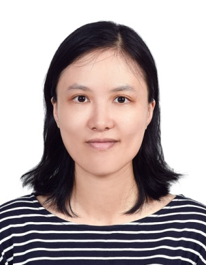 Please provide a link to your university page.
https://www.csub.edu
Please describe the courses/course numbers that you teach.
HDFS 3140
HDFS 3550,
HDFS 3650,
HDFS 4000
CAFS 4100
Describe your teaching philosophy and any research interests related to your discipline or teaching. Teaching is an exciting process that allows me to help students learn professional knowledge and apply the knowledge into their future careers. As an educator, I continue to provide students with a learning environment that is supportive and intellectually stimulating. My teaching philosophy has three components: (1) incorporating diverse perspectives, (2) the importance of developing critical thinking, and (3) making real-world connections. Regarding my research interests, I focus on four areas: 1) culture, immigration, family, and child and adolescent development; 2) risks and protectors for development of ethnic minority/low-income children; 3) youth programs and adolescent development; and 4) college students’ psychosocial and educational adjustment.