HDFS 4000: Introduction to Research Methods
HDFS 4000: Introduction to Research Methods
Purpose: to help other instructors teaching the same course
Course name/number: CAFS 4000
Common Course ID: CRN: 81735
CSU Instructor Open Textbook Adoption Portrait
Abstract: This open textbook is being utilized in a CAFS course for undergraduate or graduate students by Tzu-Fen Chang at California State University Bakersfield. The open textbook aims develop an awareness of research methodology, assessment, and evaluation of children and families as represented in the body of Child Development literature. Emphasis is placed on research as applied to children and families of diverse cultural, socioeconomic and life-style backgrounds as data collection strategies, reliability, validity, ethics and values to increase students’ ability to locate, understand, critique, report, and use child development research.. The main motivation to adopt an open textbook was reduce the cost of materials for students making it more accessible. Most students access the open textbook in the form of laptops, computers, and mobile devices (tablets/phones).
Course Title and Number: HDFS 4000: Introduction to Research Methods
Brief Description of course highlights: This course aims to develop an awareness of research methodology, assessment, and evaluation of children and families as represented in the body of Child Development literature. Emphasis is placed on research as applied to children and families of diverse cultural, socioeconomic and life-style backgrounds as data collection strategies, reliability, validity, ethics and values to increase students’ ability to locate, understand, critique, report, and use child development research.
Student population: This course is a required upper‑division course in the Child, Adolescent, and Family Studies (CAFS) program designed to give students research skills applied to child and family development. This course is intended for students majoring in Child, Adolescent, and Family Studies who have completed the program’s prerequisite courses
Learning or student outcomes: This course introduces students to research in child, adolescent, and family studies. Specifically, you will learn to:
- Use the reference area of the lirary, interlibrary loan service, and computerized databases to locate relevant articles and documents on a selected topic.
- Write research questions and problem statement for future research. Design and write a research proposal.
- Understand ethical issues and relevant research
- Develop the skills to critically evaluate published research, with an emphasis on methods used to answer the research questions. Syllabus and Sample assignments optional: To illustrates how the open textbook was used in the course.
OER/Low-cost Title: Social Research
Brief Description: Open Educational Pedagogy [OEP]: The Department of Human Development and Family Studies (HDFS) supports the use of Open Educational Pedagogies for teaching and learning. Open educational pedagogy is defined as a series of practices which involve engaging students in a course through the development, adaptation, or use of open educational resources. Open pedagogy, also known as open educational practices (OEP), is the use of open educational resources (OER) to support learning, or the open sharing of teaching practices with a goal of improving education and training at the institutional, professional, and individual level.
Please provide a link to the resource
Adler, E. S., & Clark, R. (2011). An invitation to social research: How it’s done (4thed.). Stamford Place, CT: Cengage Learning. https://epdf.pub/an-invitation-to-social-research-how-its-done.html
Authors: Adler, E. S., & Clark, R.
Student access: Access via link located on Syllabus (PDF) files
Supplemental resources: Canvas
Cost savings from that of a traditional textbook. $100.70
License*: CC BY-NC-SA
OER/Low-Cost Adoption Process
Please provide an explanation or what motivated you to use this textbook or OER/Low Cost. Save students money, improve the learning materials, or customize materials for special needs, etc.
How did you find and select the open textbook for this course I identified this open textbook by using Google to search for potential open textbooks for teaching introduction to research method. I chose this textbook because it covers all the class concepts for HDFS 4000.
Sharing Best Practices I suggest the following approaches for faculty who are just getting started with OER to consider. First, reach out to the librarians in your college or area. They can identify and share potential OERs you may use for your courses. Second, I found that web search engines (e.g., Google) and AI platforms (e.g., Chat GPT) are also useful tools to look for potential OERs in your field.
Describe any challenges you experienced, and lessons learned. For courses that you cannot identify an open textbook, I found two useful alternatives to develop OERs. The first is to identify important journal articles for each topic in a course and then use the readings as OERs. The second is to identify a number of textbooks that are stored in the CSUB library. For each textbook, select several chapters you would like to use (no more than 30% or 3 chapters of the whole book). Then you can combine all the selected chapters as OERs for a course.
Instructor Name - Tzu-Fen Chang
I am an Associate Professor in the Human Development, Child Adolescent and Family Studies department at the California State University of Bakersfield. 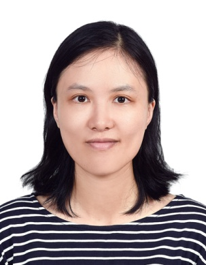 Please provide a link to your university page. https://www.csub.edu
Please describe the courses/course numbers that you teach.
HDFS 3140
HDFS 3550
HDFS 3650
HDFS 4000
CAFS 4100
Describe your teaching philosophy and any research interests related to your discipline or teaching. Teaching is an exciting process that allows me to help students learn professional knowledge and apply the knowledge into their future careers. As an educator, I continue to provide students with a learning environment that is supportive and intellectually stimulating. My teaching philosophy has three components: (1) incorporating diverse perspectives, (2) the importance of developing critical thinking, and (3) making real-world connections. Regarding my research interests, I focus on four areas: 1) culture, immigration, family, and child and adolescent development; 2) risks and protectors for development of ethnic minority/low-income children; 3) youth programs and adolescent development; and 4) college students’ psychosocial and educational adjustment.