
French 1010
French 1010
Name(s): Lena Taub, Ph.D.
Campus: CSU Bakersfield
Course Name & Description: French 1010
Project Abstract: The open access text book Liberté is being used in a French course for undergraduate students by Lena Taub Robles, Ph.D., at California State University, Bakersfield. The book is designed for first year French courses. It covers all the benchmark grammatical points addressed in the beginner level, to facilitate students moving onto the intermediate level. The book provides cultural, social, historical, and political content about France and the Francophone world through readings, links to music videos and interviews. The main motivation to adopt an open source textbook is that language textbooks are frequently very expensive, and we sought ways to save students money, while incorporating valuable cultural readings that are frequently updated. Students access the open textbook as a PDF download for free, but they are encouraged to purchase a print version for under $10
GE Credit: No
Keywords/Tags: French, hybrid, flipped class
Instructional Delivery: Hybrid
Pedagogical Approaches: Flipped, Supplemental Instruction
Class Size: 10-12 students
Liberté
Description: This French book is aimed at a first-year college student. Its features include:
Each chapter is built around communicative strategies. Clearly defined objectives in communication, culture, and grammar are given at the start of each chapter, and summary exercises at the end allow students to measure their mastery of these objectives. The materials in the book alongside supplementary videos and audio files are provided freely to the public and are intended as a replacement for commercial textbooks, which are generally ill-suited to the learning outcomes now considered crucial to successful language study. Along with these materials faculty adopting the book may have access to detailed lesson plans, rubrics for the evaluation of student work, and reliable instruments for measuring student progress and learning outcomes. Content include cultural information on France and the Francophone world, grammar and vocabulary.
Authors: Gretchen V. Angelo - California State University, Los Angeles
Formats: Available online and in Print.
Supplemental resources:
Instructors receive access to a Dropbox file with materials (assignments, daily lesson plans, student handouts, detailed writing activities and participation rubrics).
Cost savings:
Students can experience significant savings depending on previous textbook selections. They usually range from $150 to $250 per student. Since I teach this twice a year to 10-12 students, this is a potential savings for students annually of $5,000.
Accessibility and Diversity:
The textbook is ADA complaint.
Background on the Redesign
Why Redesign Your Course?
- Course Characteristics: This course has been redesigned to use an Open Educational Ressource textbook. While the book meets most of the benchmarks of my course, the order of some grammar points appear differently to how I prefer teaching them, and I have made modifications to my course to better align my course with the book.
- The Learning Problem: Enrollment in French is a challenge at CSUB given that most students take the class as an elective. When faced with a $250 textbook, many students opt to take a different elective. The use of an OER allows students to feel that their financial investment is not a burden, while still being able to take the class.
Course History/Background
- This course is the second in the first year French language sequence. Students have either taken French 1000 or have passed a placement test after taking several years of French in high school. After taking this course frequently students continue onto French 2000 and often declare a French minor. Describe how this course maps into the selection of courses the students take before and after this particular course in your department or program.
- Students must have the equivalent of French 1000 before they can take this course and can only take French 2000 after successfully completing this one.
- This course generally has a relatively low enrollement, but students thaat take it almost always succeed. Any student participating in an international program, a minor, or a major in France will benefit from taking this course. The course has been offered throughout the existence of the program. It is offered 1-2 times per year.
High Demand / Low Success Issues
- This course has a high demand of students. They are expected to work one hour per day outside of class, and the OER implementation is in part used to increase student participation with many exercises that they can complete on their own. We do not have a low success issue when students do the work, but it requires an important commitment from them.
(Upload syllabus from pre-designed course here.)
Student Characteristics
- Most students who sign up for this course have taken some French in highschool or have just taken French 1000. They come from very diverse majors and often have a personal interest in French.
Advice I Gave My Students to be Successful
- I provide students with a calendar with detailed descriptions of work that is to be done at home before coming to class as well as details on what we wil lcover in class. This way they know exactly what to prepare ahead of time.
Impact of Student Learning Outcomes/Objectives (SLOs) on Course Redesign
- 1. Comprehend and respond to beginner/intermediate conversational patterns.
2. Demonstrate proficiency and knowledge of beginner grammatical structures and terms.
3. Be Proficient in reading and writing the language.
4. Recognize significant cultural practices and historical events of the French-speaking world.
5. Use technology for e-mail and research of selected topics in French.
Alignment of SLOs With Course Redesign
- There are no changes in SLOs, I believe the cultural component will be met with more ease with this redesign.
Assessments Used to Assess Students' Achievement of SLOs
- Oral presentations
- Unit partial exams
- Short written responses to prompts
- Engagement through Canvas and email to exchange on socio-cultural materials with each other.
Accessibility, Affordability, and Diversity Considerations
Accessibility
- The textbook is ADA complaint.
- The technologies we employed are part of the regular class enrollment Learning Management System Canvas.
- I make all necessary accomodations for students who may have specific learning needs due to any kind of impairment.
Affordability
- Students can experience significant savings depending on previous textbook selections. They usually range from $150 to $250 per student. Since I teach this twice a year to 10-12 students, this is a potential savings for students annually of $5,000.
- The textbook's pricepoint allows for students of every socioeconomic status to participate in the class.
Diversity
- The pedagogical strategies support students' learning when the come from diverse backgrounds. It presents cultural materials from a broad variety of Francophone countries in Europe, the Americas, and Africa. Racial and ethnic diversity is represented in examples and cultural content.
- The different activities (oral, listening, writing, visual, and aural) reach audiences with different learning styles.
- Our classes reflect the cultural, racial, and socio-economic diversity of this campus and Bakersfield. The wealth of perspectives students bring to our course makes class discussions a valuable and necessary tool.
About the Instructor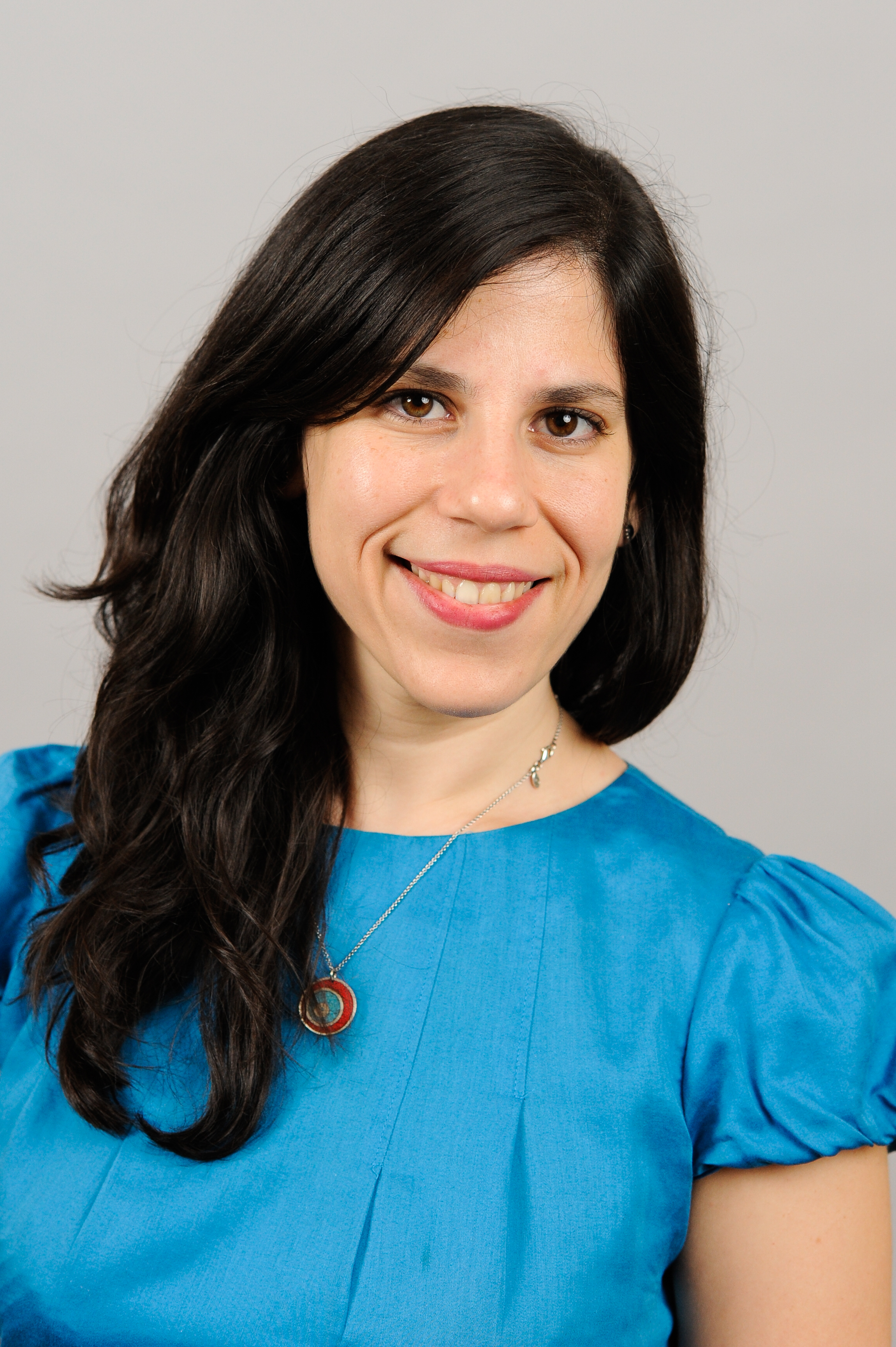
- Lena Taub Robles, Ph.D.
- I am an Associate Professor of French and Spanish at California State University, Bakersfield, where I teach French, Spanish, and Caribbean literature. My main research interests focus on Francophone and Hispanic Caribbean literatures, aesthetics, and history through a comparative lens. I also studies the intersections of gender, sexuality, and performance, in the Caribbean and its diaspora. Currently my research focuses on questions of literary translations and I am working on a translation of a novel from French into Spanish.
My main objective in foreign language teaching is to help students develop proficiency in the language, to effectively communicate and function in a francophone or hispanophone setting. I use a combination of communicative and constructivist approaches to critically engage students with the language, literatures, and cultures associated to the class, while promoting cultural diversity and sensitivity.
Course Redesign Teaching and Learning Resources
Course Redesign ePortfolio Exemplar
An example of an ePorfolio created by faculty at CSU East Bay to exhibit their course redesign project and their findings.
CSU Course Redesign Website
Review the description of the CSU system-wide initiative supporting faculty redesigning their courses to improve student success.
MERLOT's Pedagogy Portal
The MERLOT Pedagogy Portal is designed to help you learn about the variety of instructional strategies and issues that could help you become a better teacher. The resources you'll find in the Pedagogy Portal should apply to teaching a variety of disciplines.
MERLOT
MERLOT is a collection of free and open online teaching, learning and faculty development services contributed and used by an international education community. The MERLOT collection of open resources spans across a wide variety of disciplines and education levels. What sets MERLOT apart is a combination of peer reviews, member comments, learning exercises and other valuable information and metadata associated with the materials.
Implementing the Redesigned Course
Which Aspects of Your Course Have You Redesigned?
- I used to give students time in class to work on exercises. With the implementation of this textbook, instead, I have flipped the class, so that we go over exercises done for homework and I bring in more examples and exercises to clarify doubts that students have after completing homework.
- Students work in pairs and have more time to participate in class.
Adopted Technologies?
- I prepare Power Point presentations with supplementary examples.
- I use YouTube to watch videos and provide resources to use alongside the textbook.
Which Professional Development Activities Have You Participated in During Your Course Redesign?
- I have participated in workshops on campus
- I have made changes to meet accessibility requirements
- I have exchanged materials with colleagues at other campuses
Additional Resources for the Redesign?
- I have attended FTLC workshops and used valuable resources shared by colleagues.
Course Redesign Impact on Teaching and Learning
- I appreciate the flipped classroom method that this book permits. There are many exercises and students can self check the correct answers after completing and before coming to class.
- There were some particular struggles while having classes online. When I first used this book in the classroom it was easier to check student homework, they had to show it at the sart of class. Now I ask them to come to class with a question about one exercise that they struggled with, and it has helped, but at the beginning it was hard to engage in a flipped classroom style since I believe my students were not used to this method.
- When students saw the reasons why they made mistakes on some exercises, they often had "aha!" moments.
- I was able to incorporate more authentic materials like music and short texts. Other language textbooks are packed with culutral materials that are less interesting to students. This way I can decide which and update the cultural content as need be.
Assessment Findings
- Students checked their answers in an answer key after doing homework and had a better understanding of gramar content before coming to class.
- Student learning outcomes were assessed with partial exams.
- Students make short oral presentations expanding on cultural topics explored in class.
- Students communicated with instructor and peers via email, Canvas, and Zoom chats in French.
Student Feedback
- So far students have appreciated the "workbook" style of this textbook, although sometimes they find that the book gives too many written explanations for grammar points that they prefer seeing through visual pictorial representations.
Challenges My Students Encountered
- Some resources (YouTube videos) were not always available, and we had to skip some exercises or I had to provide alternate links.
Lessons Learned & Redesign Tips
Teaching Tips
- It will be useful to engage students with the cultural components, but some of these may need to be updated. For example, the book was last edited in 2017, and since then there are changes in politics, that should be updated with the help of the instructor.
Course Redesign Obstacles
- Having to move around some materials to respect the order of my class.
Strategies I Used to Increase Engagement
- I had students do activities online and share images on Canvas, so as to play more active roles in the creation of authentic materials.
- I also used music to go over grammar points and cultural topics.
- Visualizing grammar points using PowerPoint presentations helped solidify materials. Students grasp grammar better when they listen to music and are visually engaged. Here are some examples of class activities:
Instructor Reflection
- I believe redesigning this course to make it more accessible to more students, and using less expensive materials is very important to our students. It is time-consuming, but I am really happy to do it and I believe our students will benefit greatly.
- I have already shared my experiences with colleagues who teach French at other institutions. I plan to make some of my supplementary materials available to other colleagues who may use this textbook.