FINDING AFFORDABLE SOLUTIONS:
INCORPORATING A FREE TEXTBOOK INTO AN
UNDERGRADUATE SOCIAL PSYCHOLOGY COURSE
FINDING AFFORDABLE SOLUTIONS:
INCORPORATING A FREE TEXTBOOK INTO AN
UNDERGRADUATE SOCIAL PSYCHOLOGY COURSE
Campus and Author(s)
Date
Project Abstract:
Describe in three to four sentences the course or project that is being “sustained” or evaluated. Why is it essential to continue and/or expand this course redesign project? How are the students being impacted? How will this project affect the students’ time to degree and success in the CSU? How will this project take on the responsibility to continue to improve this redesign strategy?
Background on the Redesign
Why Redesign Your Course?
- Course Characteristics: I am looking to include affordable instructional materials in my social psychology course.
- The Learning Problem: Textbooks and other course materials are expensive, and I would like to reduce the cost for the students.
Course History/Background
- Social psychology is a option for Psychology majors and minors toward their degree.
- Prerequisite: Introduction to Psychology
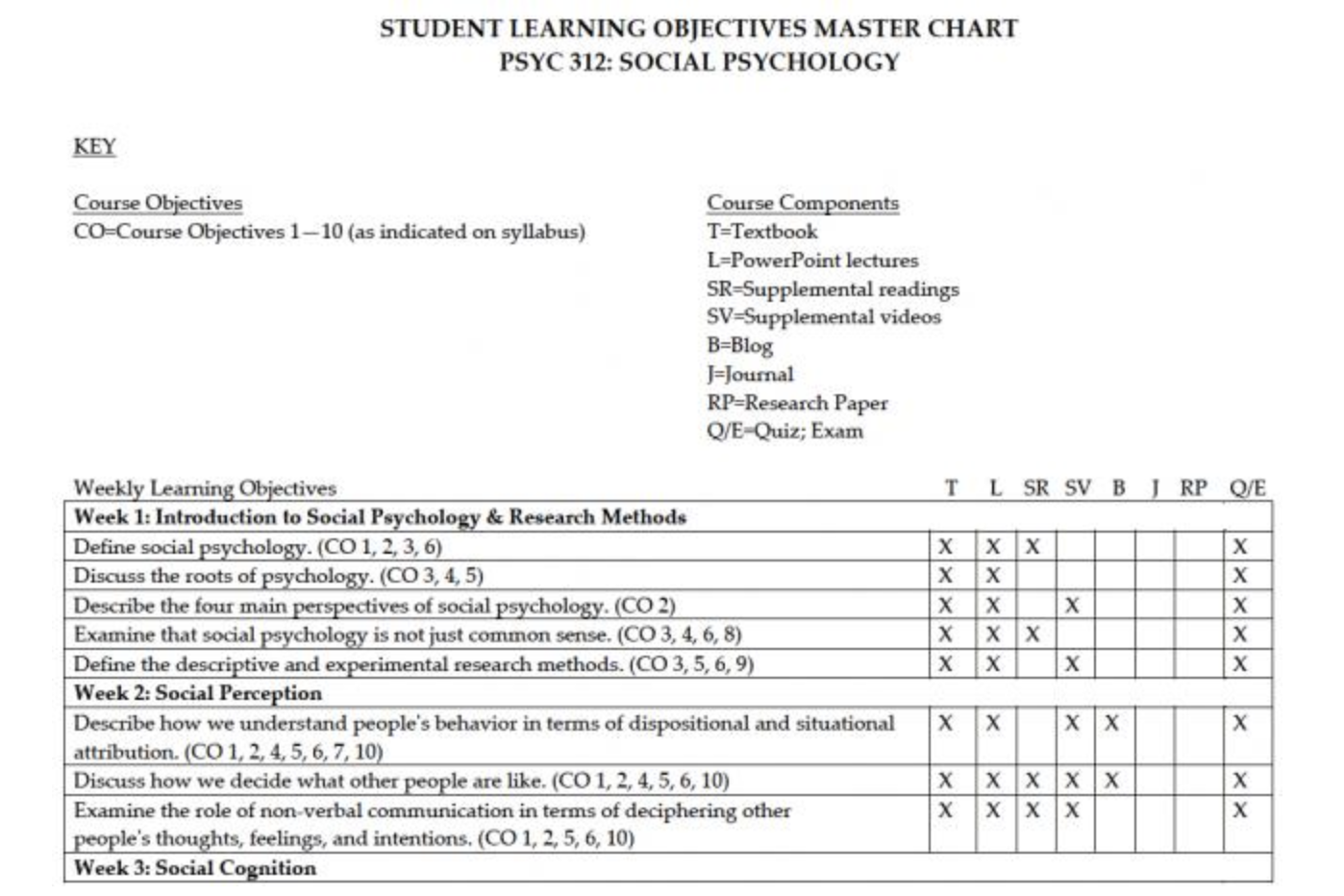
Course & Module Learning Objectives
Student Characteristics
I have been teaching multiple sections of Social Psychology online for the since 2013. The population of students who take the course include Psychology majors and Psychology minors.
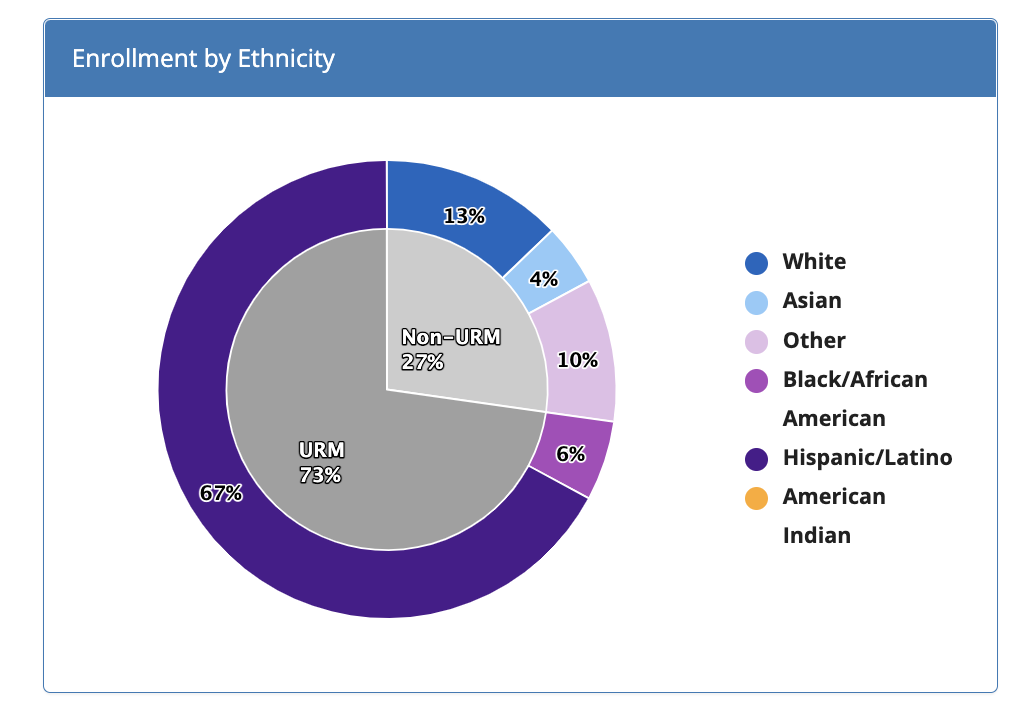
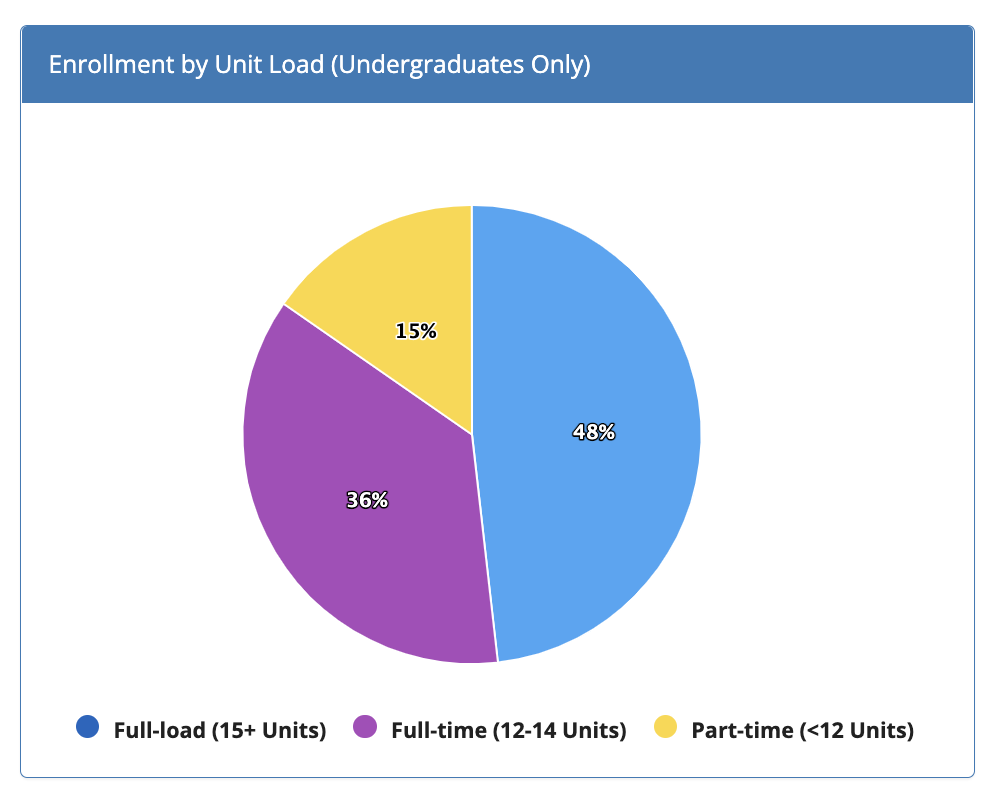
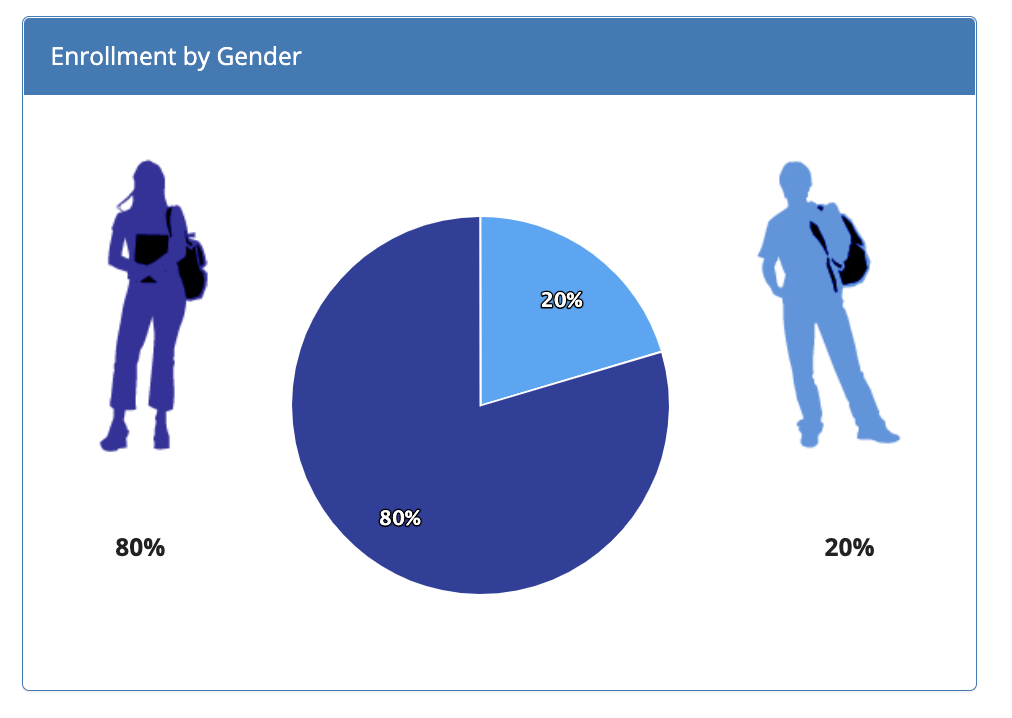
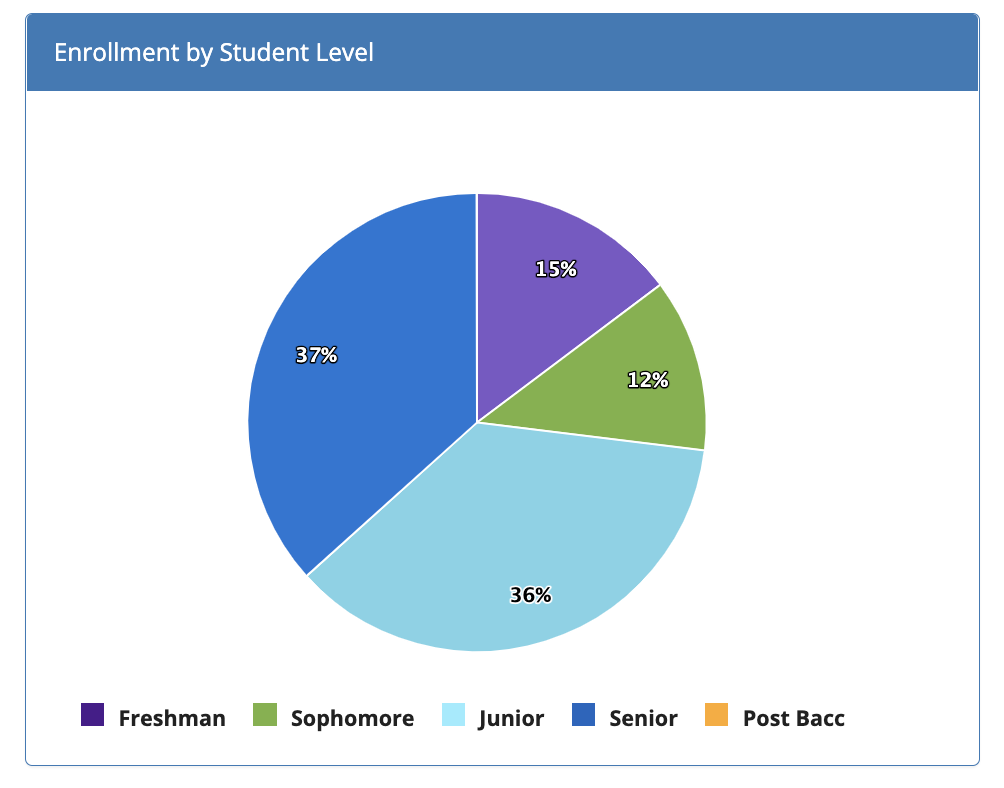
The following demographics are for Psychology students from Fall 2021:
Advice I Gave My Students to be Successful
- In order to encourage my students to be successful upon entry into the course I direct them to the Start Here content area. First they watch an Introduction Video where I introduce myself in an informal setting. It might seem trivial, but students report feeling like they are getting to know me on a personal level and this invites them into my course. Then, they watch a Navigation Video where I give them a quick tour of the course and its components. Finally, I have a syllabus overview video. After they go through the steps, they introduce themselves in the Introduction Discussion Blog.
Impact of Student Learning Outcomes/Objectives (SLOs) on Course Redesign
1. Explain how people and social situations influence individuals.
2. Evaluate major theories in social psychology.
3. Describe the scientific method as it is used by social psychologists.
4. Name important classic studies in social psychology by identifying researcher and study findings.
5. Identify and discuss theory, methodology, and conceptual evidence in support (or against) social psychological findings.
6. Recognize and evaluate social-psychological hypotheses of social psychological phenomena.
7. Apply social psychological principles and theories to everyday life.
Alignment of SLOs With Course Redesign
- Including a free textbook offers an affordable solution. The free textbook offers the instructional material to achieve the course learning objectives.
Assessments Used to Assess Students' Achievement of SLOs
- How are you planning to assess the students' achievement regarding the SLOs?
- What course activities are you planning to measure?
- Upload a rubric used for redesigned activities (optional).
Accessibility, Affordability, and Diversity Considerations
Accessibility
- The online course uses Canvas. The course is 100% ADA Compliant. I have closed-captioned all videos, each image has alt-text descriptions, and the syllabus is an accessible Word document.
Affordability
- The course is entirely free of cost as per instructional materials.
Diversity
- The course includes Universal Design components. I have created mini-vids to incorporate auditory and visual instructional strategies. I utilize a free textbook, web links to study aids for the textbook and course, activities (blogs and journals), shorter articles, videos, and images. There are multiple ways for the students to learn in the course and is not inclusive but geared toward the multitude of learning styles.
About the Instructor
I have been teaching full-time at CSU Bakersfield since 1999. I teach a variety of undergraduate psychology courses. After 14 years of face-to-face teaching, I started on a journey toward discovering quality online design and delivery. I began teaching online and hybrid courses in 2012. My social psychology course earned Quality Matters (QM) Certification in January 2014 and again in 2019 and the Quality Online Learning & Teaching (QOLT) Award in April 2014. I am certified in online course development and am currently a QM Face-to-Face (F2F) and Online (OFC) Facilitator for Applying the QM Rubric. I am certified and facilitate the QM Improving Your Online Course (IYOC) and the Designing Your Online Course (DYOC). I am a QM Master Reviewer and Peer Course Reviewer, participating in many QM and CSU QM Reviews. I have led numerous workshops for my Teaching and Learning Center, Faculty in the School of Social Sciences & Education, and the Chancellor's Office. I am also the Faculty Coordinator of Online Instruction at CSUB. I hope to be able to draw on these experiences in evaluating the success of the course redesign.

Course Redesign Teaching and Learning Resources
Course Redesign ePortfolio Exemplar
An example of an ePorfolio created by faculty at CSU East Bay to exhibit their course redesign project and their findings.
CSU Course Redesign Website
Review the description of the CSU system-wide initiative supporting faculty redesigning their courses to improve student success.
MERLOT's Pedagogy Portal
The MERLOT Pedagogy Portal is designed to help you learn about the variety of instructional strategies and issues that could help you become a better teacher. The resources you'll find in the Pedagogy Portal should apply to teaching a variety of disciplines.
MERLOT
MERLOT is a collection of free and open online teaching, learning and faculty development services contributed and used by an international education community. The MERLOT collection of open resources spans across a wide variety of disciplines and education levels. What sets MERLOT apart is a combination of peer reviews, member comments, learning exercises and other valuable information and metadata associated with the materials.
Implementing the Redesigned Course
Which Aspects of Your Course Have You Redesigned?
- This particular course redesign is to assign a free textbook for my students.
Which Professional Development Activities Have You Participated in During Your Course Redesign?
- I have participated in the FTLC Tops 1 and 2 series as part of my professional development, as well as numerous workshops on DEI. I was also accepted into the CSUB Leadership Academy.
Syllabus: Psychology 3260: Syllabus
RESULTS/FINDINGS
What Did You Change Through the Redesign?I have added creative methodologies toward encouraging student engagement and active learning with the course material; for example, creating mini-vids using Camtasia, adding YouTube clips, and using Wiki's. The mini-vids serve to highlight course concepts, interview colleagues, and offer an innovative perspective on the course content. The Wiki's are collaborative group research projects.
Course Redesign Impact on Teaching and Learning
Students report greater satisfaction in the course. The mini-vids highlighted course concepts and students appreciated the variety in instructional materials.
How were the findings assessed and how do they meet the course learning outcomes to assure the continued quality/academic standards of the course?
I conducted Knowledge Surveys via Pre and Post Tests. I also created a Feedback Survey that provided both quantitative and qualitative data with regards to both the design and delivery of the course.
Assessment Findings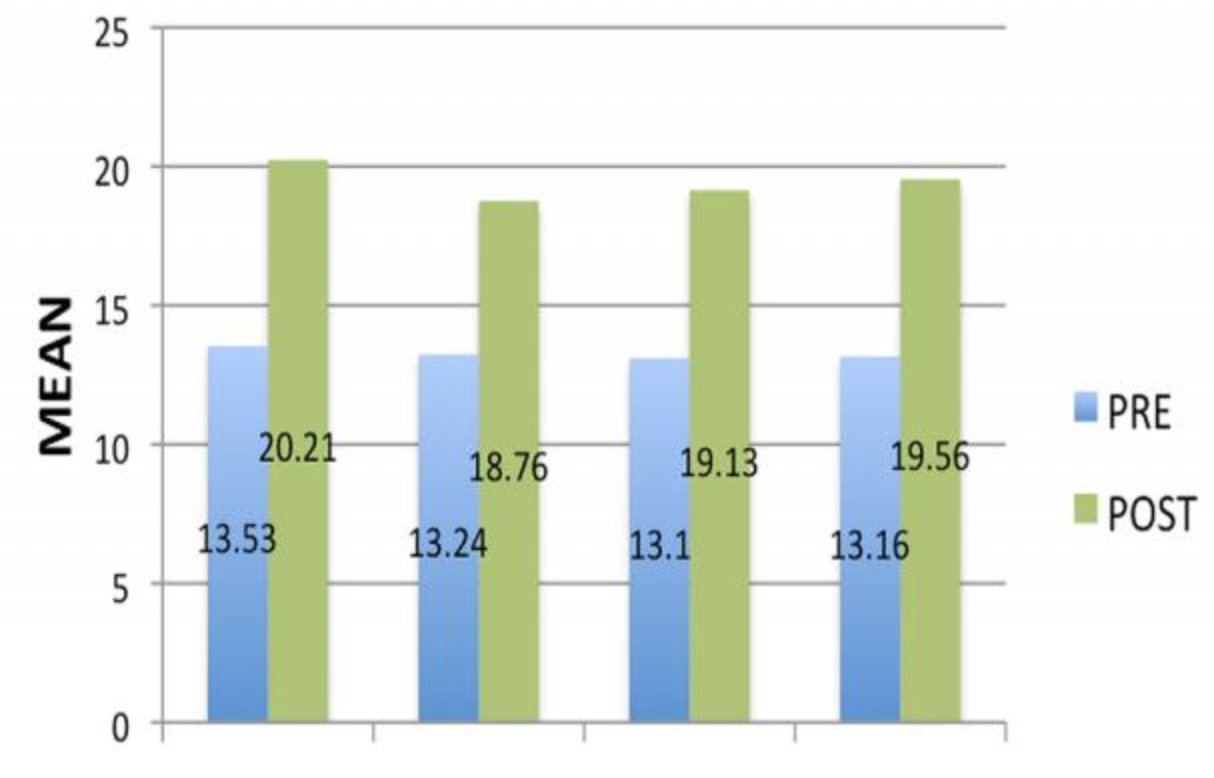
- Pre and Post Tests Across Spring 2022, Summer 2022, Fall 2022, & Winter 2023
Student Feedback
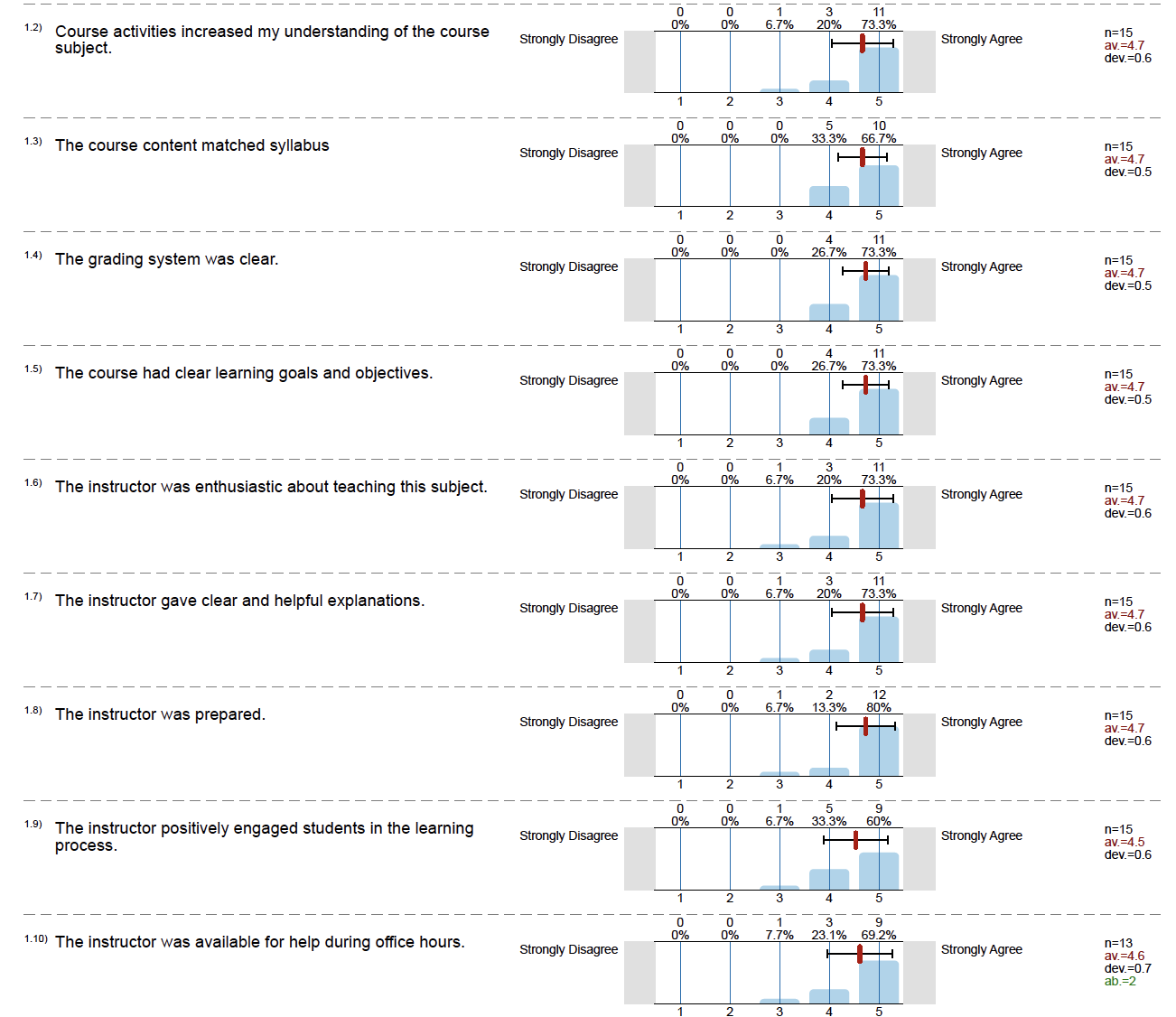
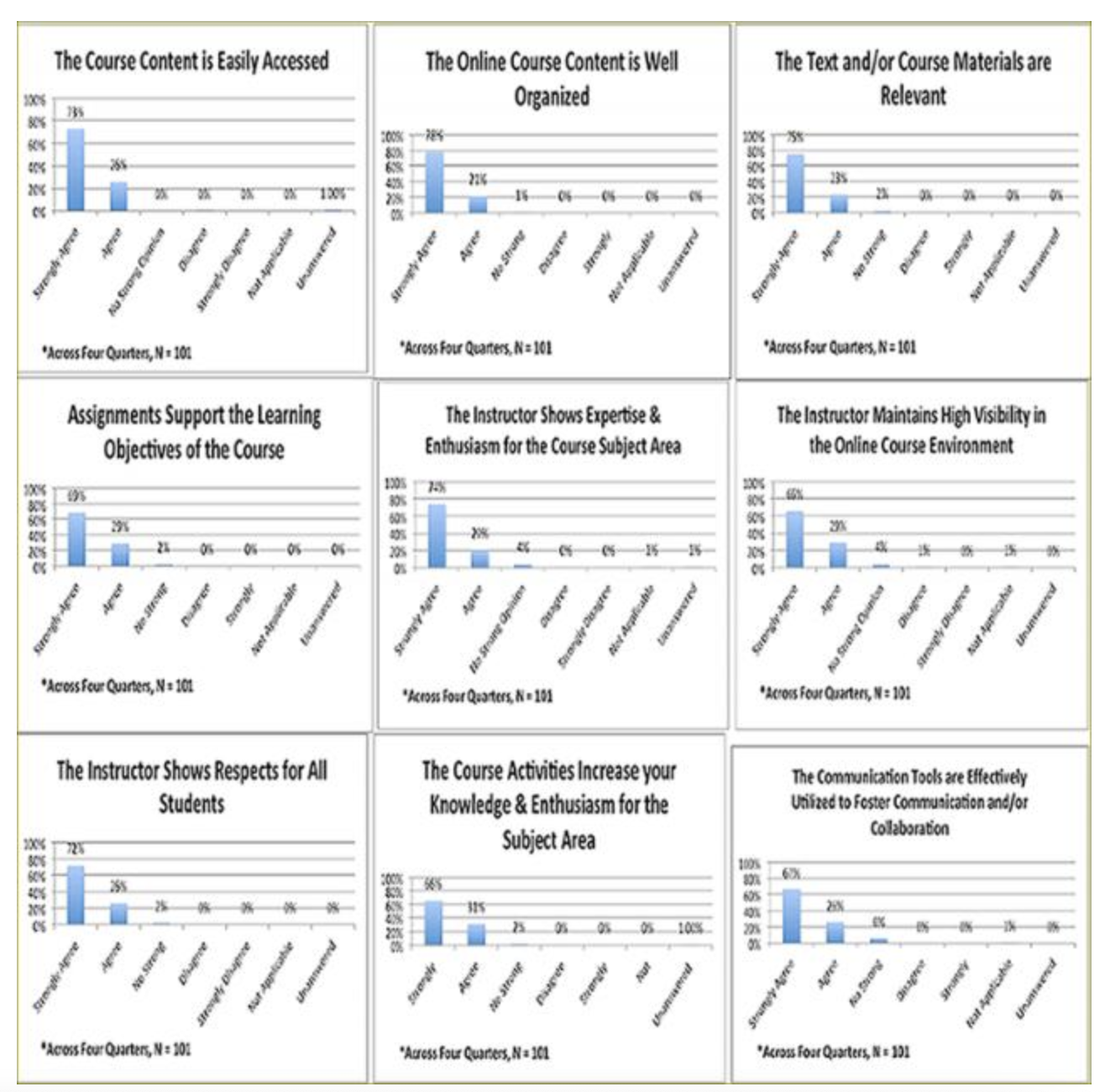
The chart below includes feedback from students in Social Psychology.
FEEDBACK SURVEY RESULTS
The following themes emerged related to the online course design and delivery: Students report greater satisfaction in the course. They enjoy the mini-vids and want more of them to highlight concepts. Based on the qualitative analysis I content coded it for themes.
THEMES
- Content Efficiently Organized
- Ease of Access and Navigation
- Consistent weekly folders/modules
- Diverse instructional materials and assessments
- Immediate feedback and responsiveness to students
TRENDS
- Positive Online Experience
- Course Pleasurable
- Online Learning Unique
- Creative Blog Posts
- Appreciated Supplemental Materials
EXAMPLES OF PEDAGOGICAL SUCCESS
- Interesting, not boring.
- Her instructions are concise and understandable. I love her use of video chat and video messages. It's awesome to see a teacher and be able to interact; nice touch. It's visible how much work she puts into her courses and it's visible she tries to make assignments personal and allow for dense concepts.
- I like that the course is to the point and interesting, not a lot of extra material, etc.
- Clear and she is very open and willing to aid success. I just love your way of giving the class online. Good job!
- I really appreciate the professor's enthusiasm for the subject and our need for clarity. There are a lot of topics that I have become more familiar with and it has become a subject my husband and I engage in.
- I like that the course is clear and flexible in doing assignments.
- The videos help me to understand concepts better.
- The blogs I love adding funny pictures to them.
- Although it is online, I feel like weekly discussions allow me to get to know my fellow classmates.
- She provides so much information, that if you don’t understand something in the textbook, then you are sure to understand it in some of the supplemental material.
- I like that the instructor is always constantly contacting us and giving us helpful tips and information even though it's an online class.
- Very organized.
- The class is online and with my busy schedule, it helps me finish classes with flexible schedule.
- The course content is extremely interesting. I enjoy having to make the weekly discussions more fun by adding links/pictures.
- The fact that my instructor is very concerned about my learning the material that she answers questions speedily, and I really appreciate the video's giving us a real world look at the concepts.
- I love how organized the teacher has been and how she has clearly laid out what is expected.
- I really like the personal videos the instructor includes. She is very thorough with explanations and makes the class easier to understand with step-by-step processes.
- I like writing in our blogs. I find this helpful not only because when we have to turn them in we are actually learning as we go. Plus, being able to read our classmates blogs and insight makes the class even more interesting.
- Being able to work at it at my own pace. And the videos posted about the topic, they're very helpful.
- I love the fact, even though I am going through one of the toughest times in my life, I can still learn and be taught. I am grateful for Professor Evans and humbled by her kindness. She is an excellent instructor who provides great feedback and encouragement.
- The navigation of Blackboard was very easy and clearly laid out.
- The way the teacher has linked the textbook website where audio formats of the chapters are available and she encourages animated posts, just not boring ones.
How easy the instructor makes the accessibility. If we have any questions she is very quick to respond and even set up a video for us. - I enjoy the videos and interaction with other students.
- Is wonderful, clear and precise. I loved the way she took her time to make quick videos on how to finish an assignment if we were all having trouble. She is a dedicated instructor. Would definitely recommend her.
- I really love her class and excited to take another; it's nice to see a modern teaching style in psychology!
Challenges My Students Encountered
- The course worked well and the students appreciated the opportunity to use a free textbook. The textbook also accompanied classic articles, videos, and lectures.
Lessons Learned & Redesign Tips
Teaching Tips
- A free textbook supports the students and offers affordable course materials to support their learning. The key is finding the right textbook that aligns with the course objectives.
Course Redesign Obstacles
- The textbook was easily adopted into the course and aligned with my course and module learning objectives as well as offered support for the course activities and assessments.
LESSONS LEARNED & TIPS Course Redesign Obstacles
The biggest hurdle is finding the time to create lecture videos. I have also learned a lot about technology in order to create the mini-vids. Sometimes campuses have resources to help with making videos, which could lesson the workload.
Strategies I Used to Increase EngagementI used a variety of instructional materials to engage students and encourage active learning techniques within the online environment.
- Mini-vids, Blogs/Journals, Wiki Group Research Projects
Instructor Reflection
- I utilized two main instruments toward the redesign of my course.
The Quality Online Learning & Teaching (QOLT) instrument helped me reflect on the design and delivery of my course. It encouraged me to analyze what worked in my online course. I also received anonymous and confidential feedback from students and this resulted in an in-depth analysis of my course design.
The course went through the extensive review process to be Quality Matters (QM) Certified. This process encouraged a deeper reflection of the design of my course and encouraged me to be explicit for this fully online class. For example, I created the learning alignment matrix to connect objectives, course materials, tools, etc., to assessments like quizzes, tests and papers.
The redesign process is ongoing and reflective. Each quarter/semester I teach the class I learn more about online design and delivery. My process continues to evolve with more experience and time. The redesign process encourages an in-depth examination of my course and creates an opportunity to improve. The ePortfolio has helped with further examination of the work I have done and continue to do in the process. The Professional Learning Community has been a great place to share information and processes with colleagues in my field.