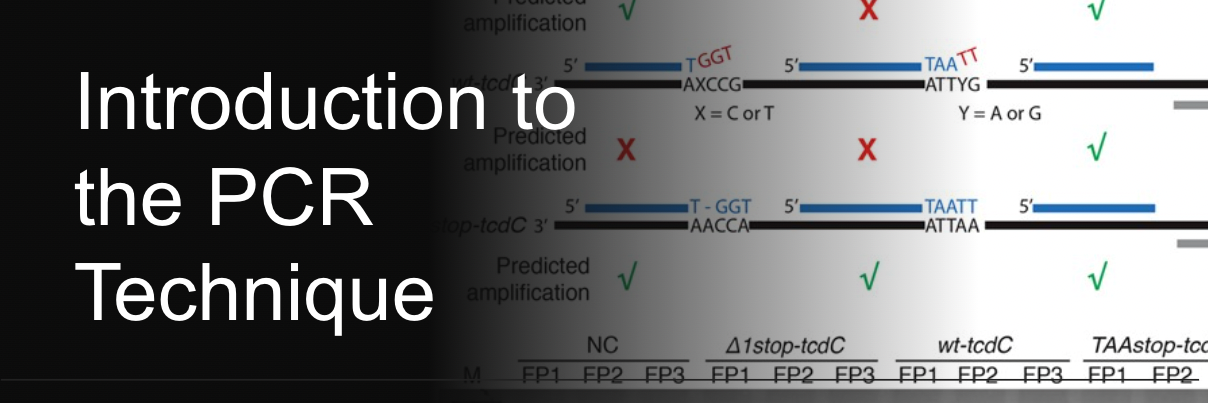
Primer Design Unit
Primer Design Unit
Campus: University of Puerto Rico, Río Piedras Campus
Author(s): Emmaly Rivera-Duprey, Ián Massini-Cotto, Yviana Jiménez-Rivera, Mánuel Jiménez-Rivera, Ernesto Espada-Nazario
Date: October 9, 2025
Project Abstract: This ePortfolio documents the implementation of a collaborative learning approach that integrates hands-on laboratory training and bioinformatics instruction to strengthen students’ understanding of molecular biology techniques. Through this process, students applied the skills acquired during training to collaboratively develop an educational module on PCR primer design. Openly publishing these educational practices supports broader access to instructional resources and allows other educators to adopt similar strategies that connect theoretical concepts with authentic scientific workflows. The approach contributed to student success by promoting active engagement, technical skill development, and collaborative problem-solving while producing a reusable learning resource.

Student Characteristics
The module is designed for high school students with prior knowledge of basic DNA structure and replication, as well as undergraduate students enrolled in introductory genetics or molecular biology courses. The student population includes learners from a variety of STEM-related majors, such as biology, microbiology, biotechnology, and pre-health tracks, who typically have foundational knowledge of genetics but limited experience with bioinformatics tools and molecular laboratory techniques.
Impact of Student Learning Outcomes/Objectives
By the end of this module, students will be able to:
1. Explain the structure and replication of DNA and describe their relevance to Polymerase Chain Reaction (PCR).
2. Retrieve and interpret DNA sequences from biological databases such as the NCBI database.
3. Design effective PCR primers using appropriate bioinformatics tools and primer design platforms.
4. Evaluate primer quality by identifying potential issues such as self-complementarity, secondary structures, or off-target binding.
5. Analyze and interpret DNA sequence data generated through Sanger sequencing to verify PCR results.
Assessments Used to Assess Students' Achievement of Student Learning Outcomes
Student achievement of the learning outcomes will be assessed through a combination of formative and applied assessments embedded throughout the module. Each lecture includes discussion questions that allow instructors to evaluate students’ understanding of key concepts and provide immediate feedback.
Affordability and Diversity Considerations
Affordability
The module uses freely accessible online resources and open educational tools, including the NCBI database and publicly available bioinformatics platforms for primer design and sequence analysis. The educational materials were published on the MERLOT platform as an open educational resource (OER), allowing students and instructors to access the module without subscription or textbook costs. By relying on openly available databases and web-based tools commonly used in molecular biology research, the module helps reduce financial barriers for students while still providing exposure to authentic scientific resources.
Diversity
The pedagogical approach emphasizes collaborative learning, guided practice, and clear instructional scaffolding to support students from diverse academic and personal backgrounds. The module is designed to accommodate learners with varying levels of prior experience in molecular biology and bioinformatics by introducing concepts progressively and providing opportunities for discussion and practice. Collaborative activities encourage peer learning and knowledge sharing among students with different perspectives and educational backgrounds, supporting inclusive participation for students from diverse racial, cultural, socioeconomic, and first-generation college backgrounds.


and  are providing a free and open teaching-ePortfolio for you to capture and share your expertise and experiences in redesign your teaching to improve student success. The template provides you scaffolding questions that we hope will make it easier for you to share your "know how" for innovating your instruction.
Your ePortfolio is hosted for free and your can share it, invite collaborators, and much more with MERLOT's Content Builder.
MERLOT-SkillsCommons Open Educational Practices Portal
Explore over 1,000 teaching and institutional ePortfolios and case studies capturing innovative educational practices and openly publishing them for you to reuse, revise, remix, retain, and redistribute.
MERLOT Pedagogy Portal
This Portal is designed to help you learn the variety of instructional strategies and issues helping you become a better teacher. The resources you'll find here should apply to teaching a variety of disciplines.
MERLOT
MERLOT is a collection of free and open online teaching, learning and faculty development services contributed and used by an international education community. The collection of open resources spans across a wide variety of disciplines and education levels. What sets MERLOT apart is a combination of peer reviews, member comments, learning exercises and other valuable information and metadata associated with the materials.